100, Mohangirikrupa estate, Deluxe Wafer Lane, Nr Jupiter Cross Road, GIDC Makarpura, Vadodara


The bearing industry demands extremely high precision, smooth surface finishes, and strict dimensional accuracy to…
- Manufacturing Ideas
- 7 minute read
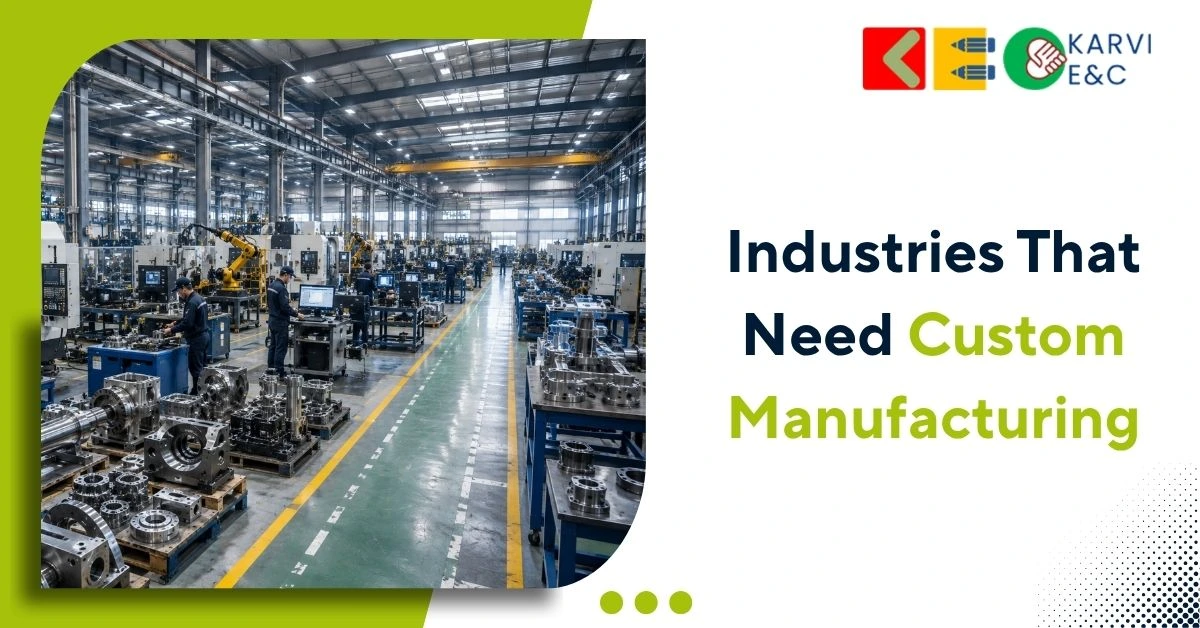
Modern manufacturing is no longer driven by standardized production alone. Industries today operate with unique technical requirements, specialized applications, and stringent quality standards that often cannot be fulfilled using off-the-shelf products or conventional manufacturing methods. From complex industrial equipment to precision-engineered components, businesses increasingly require solutions tailored to their operational needs.
To meet these evolving demands, Custom Manufacturing has become an essential approach for organizations seeking greater flexibility, improved product performance, and higher production efficiency. Rather than adapting operations to standard products, custom manufacturing develops products, components, and systems around specific industrial requirements.
As manufacturing technologies continue to advance, customized production solutions enable industries to improve operational reliability, optimize production processes, and maintain a competitive advantage in rapidly changing markets.
Understanding Custom Manufacturing
Every manufacturing operation has different production goals, technical specifications, and operational challenges. Standard manufacturing methods may satisfy common applications, but industries with specialized requirements often require engineered solutions designed specifically for their processes. Custom Manufacturing is the process of designing and producing products, components, or equipment according to unique customer requirements rather than mass-producing standardized items. Every stage—from design and engineering to material selection and production—is developed to meet specific performance, dimensional, and operational expectations.
Manufacturers choose custom solutions to:
- Meet unique production requirements
- Improve product performance
- Support specialized applications
- Enhance manufacturing efficiency
- Achieve higher quality standards
- Increase operational flexibility
By focusing on application-specific requirements, customized manufacturing delivers solutions that align closely with industrial objectives.
Why Industries Prefer Custom Manufacturing?
Different industries face different production challenges. Factors such as complex product designs, demanding operating conditions, and strict quality standards often require solutions that standard manufacturing cannot provide.
Many organizations rely on Custom Manufacturing because it allows products and production systems to be developed around actual operational needs instead of adapting existing products to unsuitable applications.
Some of the major advantages include:
- Better product compatibility
- Improved manufacturing precision
- Reduced material waste
- Enhanced operational efficiency
- Greater design flexibility
- Improved product reliability
Instead of compromising performance, customized manufacturing enables organizations to achieve solutions that support long-term operational success.
Automotive Industry
The automotive sector requires high levels of precision, consistency, and production efficiency.
Manufacturers produce thousands of components that must fit together accurately while maintaining strict quality standards. Standard manufacturing methods may not always meet specialized production requirements for prototypes, custom assemblies, or process-specific equipment.
Through Custom Manufacturing, automotive companies can develop:
- Precision-engineered components
- Custom production equipment
- Specialized tooling
- Process-specific assemblies
- Prototype parts
Customized manufacturing improves production accuracy while supporting faster product development and more efficient manufacturing operations.
Heavy Engineering and Industrial Equipment
Heavy engineering projects often involve large-scale machinery, structural assemblies, and specialized industrial equipment designed for demanding operating environments.
Because every project has different technical specifications, manufacturers frequently require customized solutions capable of meeting unique load, durability, and operational requirements.
Organizations operating in heavy engineering benefit from:
- Custom structural components
- Heavy fabrication solutions
- Process-specific equipment
- Engineered assemblies
- Industrial support structures
By implementing Custom Manufacturing, industries can improve equipment reliability while ensuring that products meet project-specific performance expectations.
Electronics Manufacturing
Electronics manufacturing demands extremely high levels of precision and consistency.
Even small dimensional variations can affect product performance, assembly accuracy, and quality. Manufacturers producing electronic equipment often require customized production solutions capable of meeting tight tolerances and complex product specifications.
Applications include:
- Precision component manufacturing
- Specialized enclosures
- Assembly fixtures
- Custom production parts
- Prototype development
With Custom Manufacturing, electronics manufacturers can improve production quality while maintaining consistency throughout the manufacturing process.
Oil & Gas and Process Industries
Industries operating in demanding environments require products capable of performing under extreme temperatures, pressure conditions, and continuous operation.
Standard products may not provide the durability or performance required for these applications.
Customized manufacturing supports these industries through:
- Engineered process equipment
- Custom fabricated components
- Specialized piping assemblies
- Heavy-duty structural systems
- High-performance industrial parts
Using Custom Manufacturing, organizations can develop equipment that improves operational safety, reliability, and long-term performance.
Looking to implement Custom Manufacturing solutions for your industrial requirements? Contact us today for expert guidance and customized manufacturing solutions.
Power and Energy Sector
Power generation and energy infrastructure require highly dependable equipment designed for continuous operation.
Components used in these industries must meet strict engineering standards while maintaining performance under demanding operating conditions.
Custom manufacturing supports this sector by delivering:
- Engineered structural components
- Equipment supports
- Industrial assemblies
- Custom fabrication
- Application-specific manufacturing solutions
By producing solutions tailored to operational requirements, Custom Manufacturing contributes to greater equipment reliability and improved maintenance efficiency.
Precision Manufacturing Applications
Industries producing high-accuracy products often depend on manufacturing systems capable of maintaining tight tolerances and consistent quality.
Precision manufacturing applications include:
- Industrial machinery
- Precision components
- Engineering equipment
- Tooling systems
- Mechanical assemblies
Through Custom Manufacturing, organizations can achieve greater dimensional accuracy, reduce production variation, and improve product quality across manufacturing operations.
Customized engineering also helps manufacturers reduce rework, minimize waste, and strengthen production consistency.
Industries That Benefit from Custom Manufacturing
| Industry | Why Custom Manufacturing Is Required |
| Automotive | Precision components and specialized assemblies |
| Heavy Engineering | Custom structural and industrial equipment |
| Electronics | High-accuracy components and specialized production |
| Oil & Gas | Equipment designed for demanding operating conditions |
| Power & Energy | Reliable components for critical infrastructure |
| Plastics & Moulding | Product-specific tooling and mould development |
Customized manufacturing allows each industry to develop solutions that improve efficiency, reliability, and long-term operational performance.
Future of Custom Manufacturing
Manufacturing industries continue to evolve as customer expectations, product complexity, and production technologies advance.
Organizations increasingly require flexible manufacturing systems capable of producing customized products without compromising efficiency or quality.
As digital engineering, advanced manufacturing technologies, and automation continue to develop, Custom Manufacturing will play an even greater role in supporting:
- Faster product development
- Improved manufacturing flexibility
- Better operational efficiency
- Higher production quality
- Sustainable industrial growth
Businesses investing in customized manufacturing solutions will be better positioned to respond to changing market demands while maintaining long-term competitiveness.
Frequently Asked Questions
Custom Manufacturing is the process of designing and producing products, components, or systems according to specific customer requirements rather than standard production specifications.
Industries such as automotive, heavy engineering, electronics, oil & gas, power generation, and industrial equipment manufacturing benefit significantly from customized manufacturing solutions.
It helps manufacturers develop products that match unique operational requirements, improve quality, increase efficiency, and support specialized applications.
Customized solutions reduce process inefficiencies, improve product compatibility, minimize waste, and enhance manufacturing reliability.
Yes. Custom Manufacturing is commonly used for prototypes, specialized components, limited production runs, and application-specific industrial products.
Conclusion
Different industries face unique manufacturing challenges that require more than standardized production methods. By developing products and systems around specific operational requirements, Custom Manufacturing enables manufacturers to improve precision, reliability, and production efficiency.
From automotive and heavy engineering to electronics, oil & gas, and power generation, customized manufacturing solutions help organizations meet complex technical demands while supporting long-term operational success. As industrial requirements continue to evolve, Custom Manufacturing will remain a key driver of innovation, flexibility, and sustainable manufacturing growth.
Custom Engineering SolutionsCustom Manufacturing ServicesIndustrial Manufacturing IndustryManufacturing IndustryPrecision Manufacturing
Related Posts
The bearing industry relies heavily on precision, efficiency, and consistent production flow to meet high-quality…