100, Mohangirikrupa estate, Deluxe Wafer Lane, Nr Jupiter Cross Road, GIDC Makarpura, Vadodara



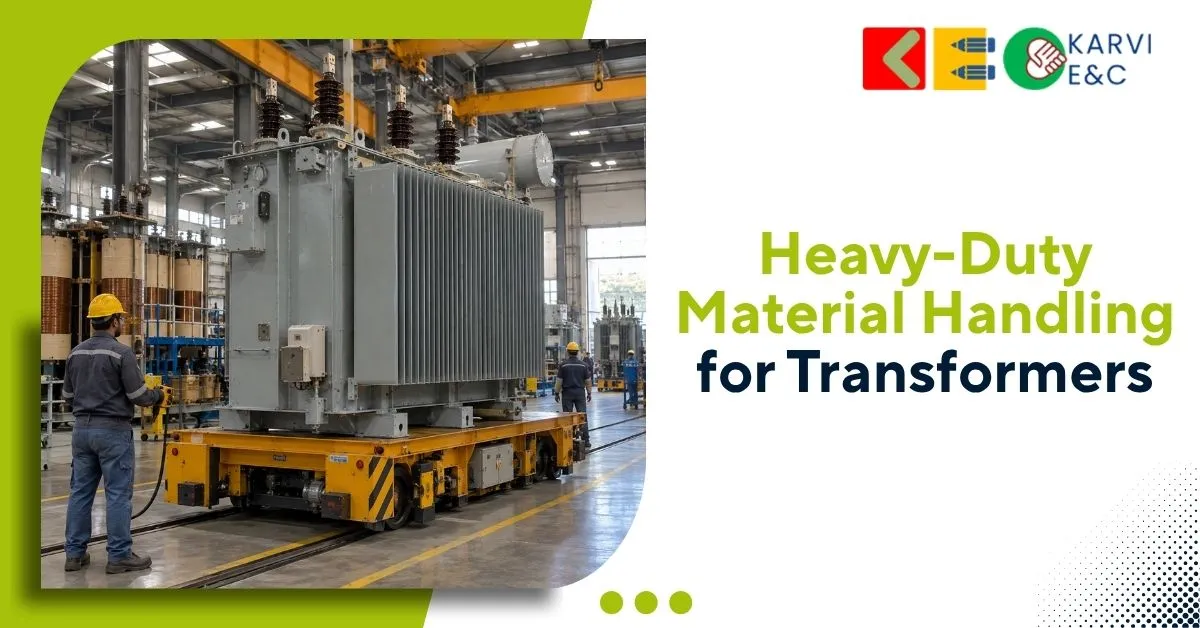
Transformer manufacturing involves handling large, heavy, and often delicate components throughout assembly and production. Moving…
- Productivity Tips
- 6 minute read
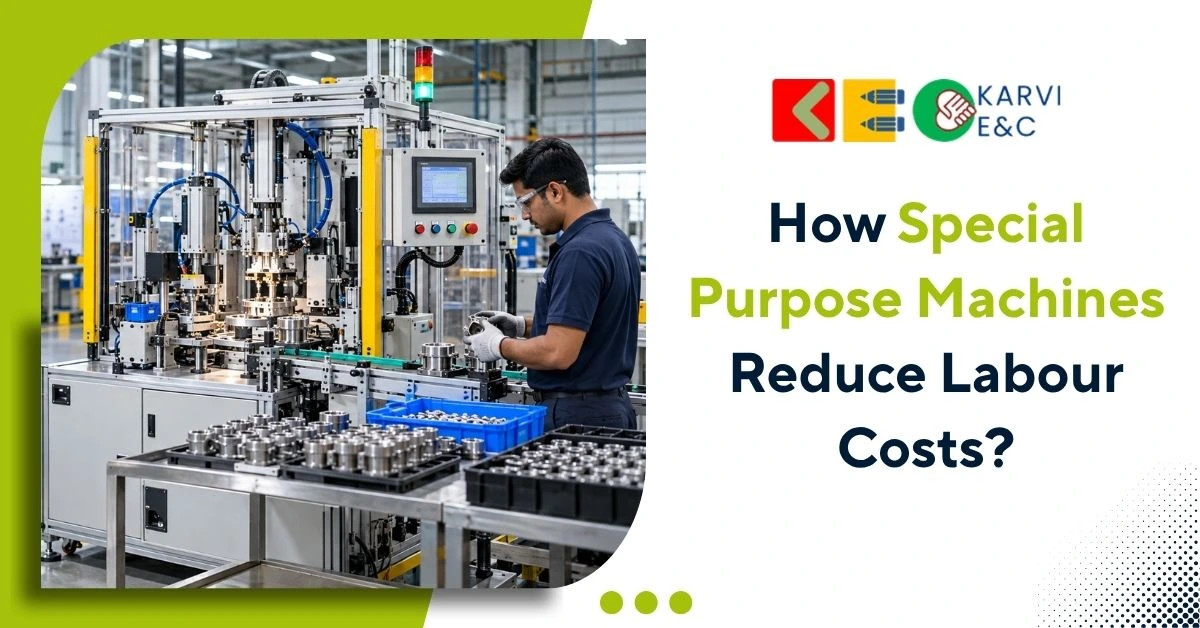
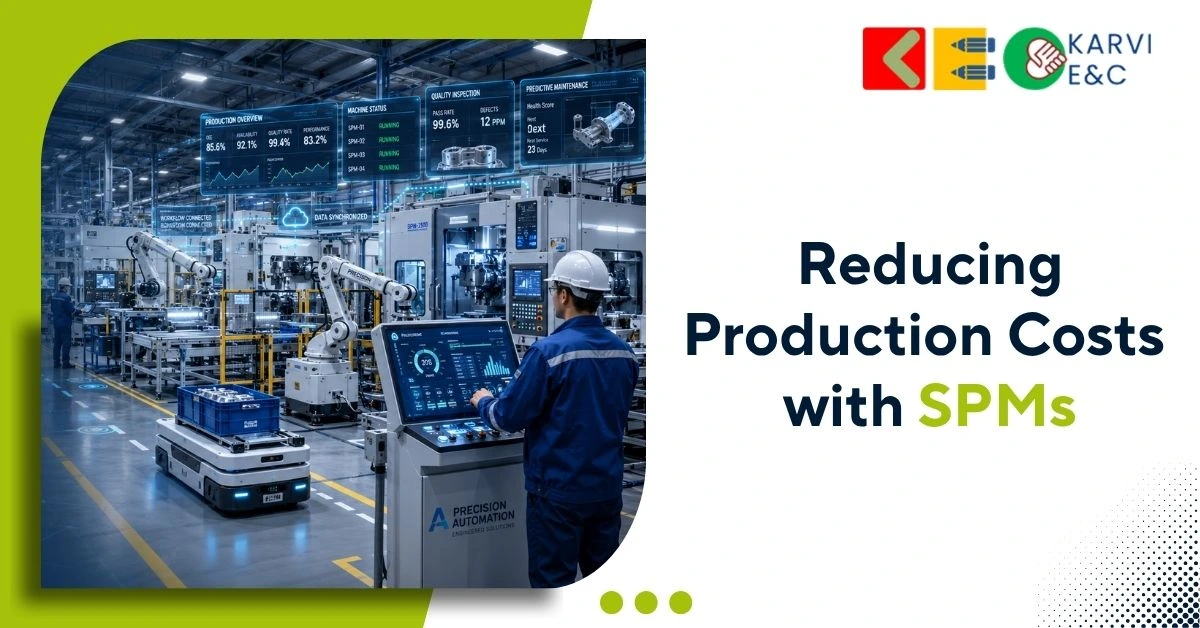
Manufacturing companies are constantly looking for ways to control operating costs without compromising productivity or quality. Labour costs can increase when production depends heavily on repetitive manual operations, large workforces, or processes with frequent errors and rework. This is where Special Purpose Machines can provide a practical solution by automating specific manufacturing activities and improving the efficiency of production operations.
1. Automating Repetitive Operations
Repetitive manufacturing tasks often require operators to perform the same movement or process throughout a shift. This consumes considerable labour hours and can limit productivity.
By using Special Purpose Machines, manufacturers can automate process-specific activities such as assembly, testing, feeding, inspection, or handling. Once automated, operators may only need to load materials, monitor the process, or manage exceptions rather than continuously perform the operation manually.
This reduces the amount of direct labour required for repetitive production activities.
2. Increasing Output Per Operator
Labour-cost reduction is not only about reducing the number of workers. It is also about increasing the amount of production achieved by the available workforce.
A Special Purpose Machines can perform defined operations with consistent cycle times, allowing one operator to supervise a process that may previously have required several people for repetitive manual work. As output per operator increases, the labour cost associated with each manufactured component can decrease.
This becomes particularly valuable in high-volume production environments.
3. Reducing Labour Used for Rework
Manual operations can result in incorrect assembly, positioning, handling, or other process variations. When these mistakes create defective products, additional labour is required for inspection, correction, disassembly, and rework.
Well-designed Special Purpose Machines can integrate controlled sequences, dedicated fixtures, sensors, testing systems, and inspection functions. These features help maintain process consistency and identify problems earlier.
Fewer production errors can therefore mean fewer labour hours spent correcting defects and repeating completed operations.
4. Improving Workforce Utilization
Automation does not necessarily mean removing workers from the production process. Instead, Special Purpose Machines can change how available manpower is utilized.
A single operator may be able to monitor or operate an automated process that previously required several people for repetitive activities. Depending on the application, this can help manufacturers manage workforce requirements while maintaining production capacity.
Key benefits can include:
- Reduced repetitive manual operations
- Better operator utilization
- Consistent production cycles
- Lower rework requirements
- Improved workplace safety
- Higher production efficiency
Looking to reduce labour-intensive operations through practical automation? Contact us for custom SPM solutions.
5.Supporting Faster Production Cycles
Production delays can increase labour costs because employees spend more time waiting for processes to complete. Special Purpose Machines are designed around specific manufacturing requirements, allowing operations to be optimized for the required application.
Custom machine design can integrate process-specific automation, material handling, controls, and testing into a coordinated system. This can reduce unnecessary movement and waiting while supporting faster and more predictable production cycles.
6. Minimizing Material Movement
Material handling can consume a significant amount of operator time when components must be repeatedly transported between different production stages.
A Special Purpose Machines can be integrated with material handling systems to automate or simplify the movement of components within a defined process. This reduces unnecessary operator movement and allows employees to spend more time on productive manufacturing activities.
Better material flow can also help reduce waiting between operations.
7. Making Better Use of Skilled Workers
Skilled employees are valuable for activities that require technical judgment, troubleshooting, process improvement, and quality decisions. Using skilled labour primarily for repetitive operations may not be the most efficient use of their capabilities.
With Special Purpose Machines, repetitive work can be automated while employees focus on machine supervision, quality control, maintenance, troubleshooting, and process improvement.
This allows manufacturers to gain more value from their existing workforce instead of relying only on additional manpower as production requirements grow.
8. Choosing the Right Level of Automation
The objective should not be to automate every manufacturing operation. The right approach is to identify processes where automation can deliver measurable improvements.
Karvi Engineering & Consultancy develops custom SPMs based on specific production requirements. Its solutions include semi-automatic and fully automatic machines, assembly and testing automation, process-specific equipment, integrated PLC automation, material handling integration, and retrofit or machine upgradation solutions.
This allows manufacturers to select an automation approach according to their production volume, process requirements, labour involvement, and desired performance improvements.
Building Cost-Effective Automation
The value of Special Purpose Machines depends on selecting the right process for automation. Automating an inefficient process without understanding its underlying problems may not deliver the expected savings.
Karvi Engineering & Consultancy develops custom SPMs and engineered automation systems based on specific production requirements. Solutions can include semi-automatic and fully automatic machines, assembly and testing automation, integrated PLC controls, material handling integration, and machine upgrades.
Frequently Asked Questions
They automate repetitive or process-specific activities, reducing manual effort and allowing operators to focus on supervision, quality control, and other value-adding activities.
Not always. Many SPMs are designed to work alongside operators by automating specific operations while people handle supervision, loading, quality checks, or other tasks.
Yes. Custom machines can provide consistent cycle times, reduce unnecessary manual movement, and automate specific operations, helping manufacturers improve production output.
They can be particularly effective for repetitive, high-volume processes where consistent cycle times and reduced manual intervention can provide significant operational benefits.
Yes. Depending on the machine and production requirement, retrofit and machine upgradation solutions can add automation, controls, or process improvements without completely replacing existing equipment.
Conclusion
Reducing labour costs is not simply about reducing manpower. It is about improving how people, machines, and processes work together. By automating repetitive activities, improving consistency, reducing errors, and increasing production efficiency, Special Purpose Machines can help manufacturers achieve better workforce utilization and more cost-effective operations.
Custom Automation SolutionsSpecial Purpose Machine ManufacturerSpecial Purpose MachinerySPM AutomationSPM Machine Manufacturer
Related Posts
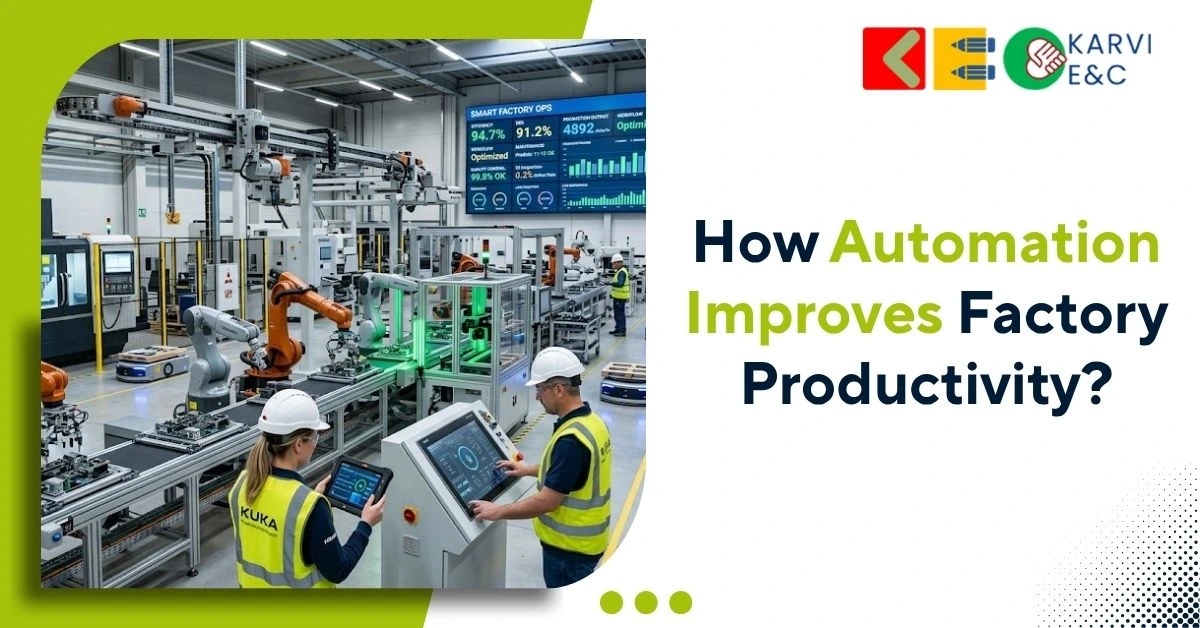
Manufacturing industries are constantly under pressure to produce more in less time while maintaining product…
Controlling production costs has become a priority for manufacturers operating in competitive industrial environments. Rising…