100, Mohangirikrupa estate, Deluxe Wafer Lane, Nr Jupiter Cross Road, GIDC Makarpura, Vadodara



Choosing an automation partner is an important decision for manufacturers planning to improve productivity, quality,…
- Automation Tips
- 6 minute read
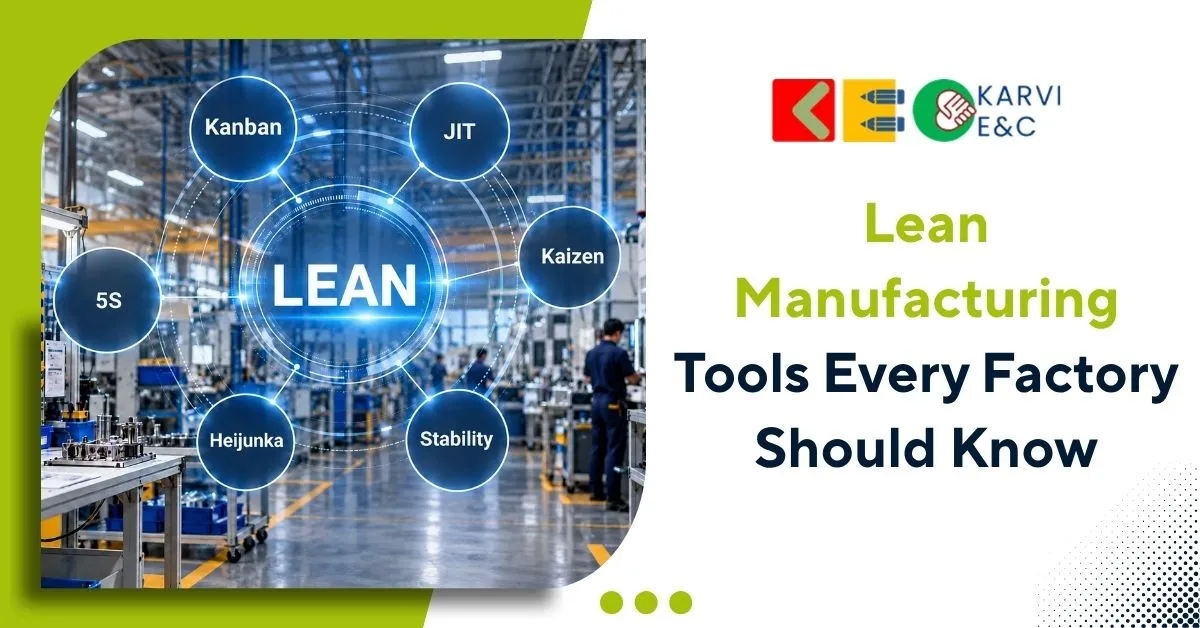
Manufacturing efficiency depends on more than increasing machine speed or adding automation. Factories also need to identify waste, improve workflow, control variation, and make better use of people and equipment. This is where Lean Manufacturing Tools help manufacturers create more efficient and consistent production systems.
From workplace organization to process improvement and mistake prevention, Lean methods provide practical ways to identify problems and improve operations. When combined with suitable automation, these methods can also support sustainable productivity improvements.
1. 5S for Workplace Organization
5S is often a practical starting point for Lean implementation. As one of the widely used Lean Manufacturing Tools, it focuses on organizing the workplace so that tools, materials, and equipment are easy to locate and use.
The five stages are:
- Sort: Remove unnecessary items.
- Set in Order: Arrange required items for easy access.
- Shine: Keep the workplace clean.
- Standardize: Establish consistent procedures.
- Sustain: Maintain the improvements over time.
A well-organized workstation can reduce unnecessary movement, improve safety, and make production activities easier to manage.
2. Kaizen for Continuous Improvement
Kaizen focuses on making small, continuous improvements rather than waiting for major changes. As one of the practical Lean Manufacturing Tools, it encourages operators, supervisors, engineers, and management to identify problems and improve processes on the shop floor.
For example, repeated delays at a workstation may indicate poor material positioning or an inefficient sequence of operations. Instead of accepting the delay as normal, a Kaizen approach encourages teams to identify its cause and improve the process.
3. Value Stream Mapping
Value Stream Mapping (VSM) provides a visual view of how materials and information move through a manufacturing process. As one of the important Lean Manufacturing Tools, it helps identify activities that add value and those that create unnecessary waiting, transportation, inventory, or processing.
Manufacturers can use VSM to locate bottlenecks and prioritize improvement opportunities before investing in new equipment or automation.
4. Kanban for Production Flow
Kanban is a visual method for controlling material replenishment and production flow. As one of the practical Lean Manufacturing Tools, it helps ensure that components are supplied according to actual requirements rather than producing or moving excessive quantities.
When implemented effectively, Kanban can help reduce excess inventory and improve coordination between production stages. It can also work alongside material handling systems to maintain a smoother and more controlled flow of components across the production floor.
5. Poka-Yoke for Error Prevention
Poka-Yoke, or mistake-proofing, focuses on preventing errors before they become defects. As one of the effective Lean Manufacturing Tools, it helps manufacturers improve process accuracy and reduce the possibility of incorrect operations. A fixture that allows a component to be installed only in the correct orientation is a simple example.
In automated manufacturing, assembly fixtures, sensors, interlocks, and inspection systems can support Poka-Yoke principles by preventing incorrect operations or identifying problems early.
6. Takt Time and Production Balance
Takt Time indicates the production pace required to meet customer demand. As one of the useful Lean Manufacturing Tools, it helps manufacturers align production capacity with actual demand and identify opportunities to improve process balance.
Takt Time = Available Production Time ÷ Customer Demand
Understanding takt time helps manufacturers compare the required production rate with actual cycle times. If one operation takes significantly longer than others, it may become a bottleneck. Production line balancing can then help distribute work more effectively.
Want to improve your manufacturing workflow? Contact us to discuss practical Lean automation solutions.
Combining Lean Tools with Automation
Lean principles are most effective when they are connected to actual manufacturing challenges. Once waste and process inefficiencies are identified, Lean Automation Solutions can provide practical ways to improve the operation.
Depending on the requirement, this may involve:
- Special Purpose Machines (SPMs)
- Production line balancing
- Workflow automation
- Factory layout optimization
- Material handling systems
- Automated inspection
- Ergonomic workstations
This approach avoids automating an inefficient process without first understanding why the inefficiency exists.
Build a More Efficient Manufacturing System
The right Lean Manufacturing Tools depend on the factory’s products, processes, production volume, and operational challenges. 5S may address workplace organization, while Value Stream Mapping can reveal broader process waste and Poka-Yoke can improve quality.
For manufacturers looking to combine Lean principles with practical engineering and automation, Lean Automation Solutions can help turn process improvements into scalable production systems.
Frequently Asked Questions
Lean Manufacturing Tools are methods used to identify and reduce waste, improve workflow, increase productivity, and create more consistent manufacturing processes.
5S is often a practical starting point because it improves workplace organization and creates a foundation for identifying further process improvements.
Kaizen encourages employees to identify small problems and make continuous improvements to processes, workstations, quality, and production flow.
Yes. Lean methods can identify process inefficiencies, while automation can provide practical solutions for repetitive operations, material handling, inspection, assembly, and workflow improvement.
Poka-Yoke uses mechanisms, fixtures, sensors, or process controls to prevent incorrect operations or detect mistakes before they result in defective products.
Conclusion
Factories can improve efficiency by selecting Lean methods that directly address their specific production challenges. By applying 5S, Kaizen, Value Stream Mapping, Kanban, Poka-Yoke, and Takt Time where appropriate, Lean Manufacturing Tools can help reduce waste, improve workflow, and strengthen production performance. When combined with practical automation, these improvements can support more consistent and scalable manufacturing operations.
Lean Manufacturing SystemsLean Manufacturing TechniquesManufacturing OptimizationProduction OptimizationSmart Manufacturing
Related Posts

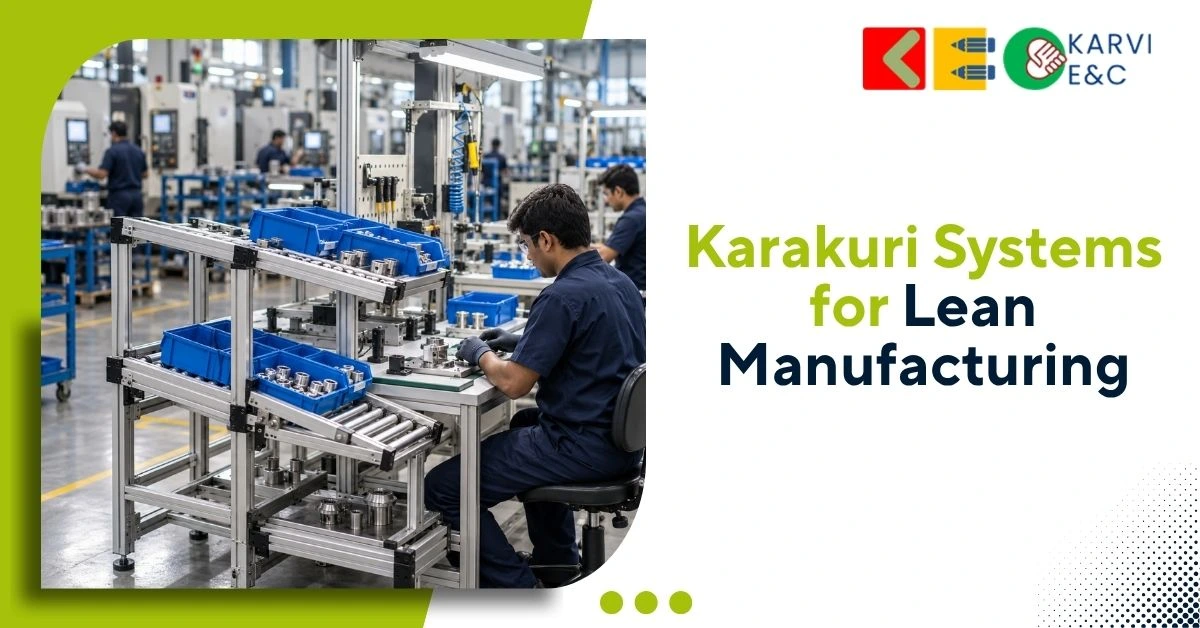
Lean manufacturing is about removing activities that do not add value. Excess movement, waiting, manual…
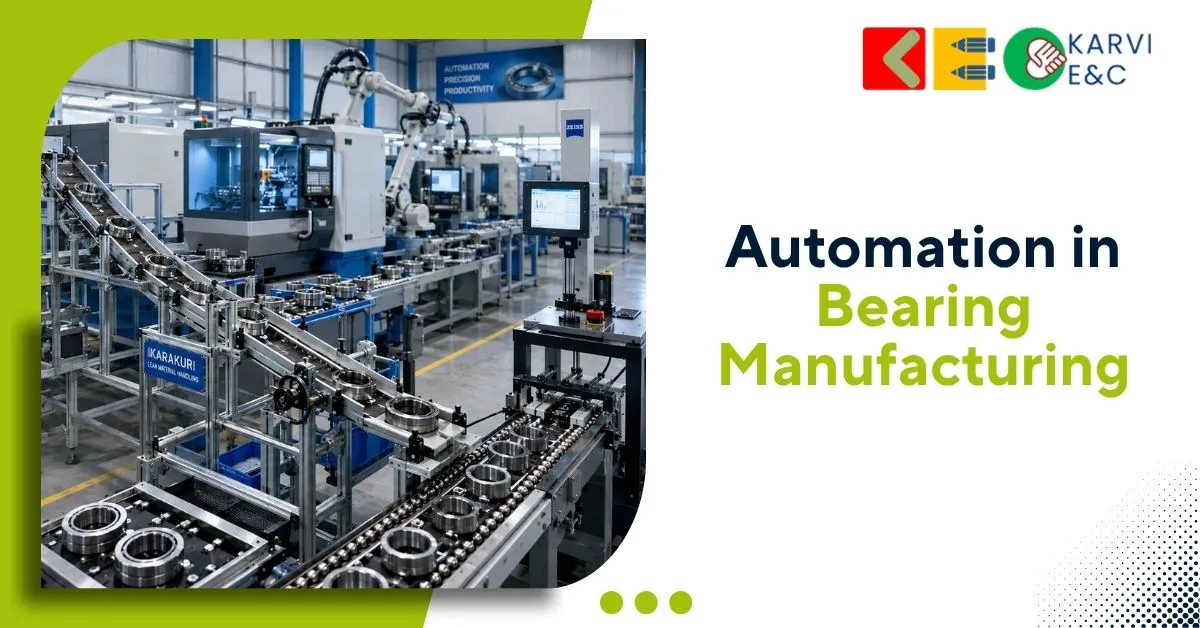
Bearing manufacturing requires precision, consistency, and controlled production processes to ensure reliable performance in demanding…