100, Mohangirikrupa estate, Deluxe Wafer Lane, Nr Jupiter Cross Road, GIDC Makarpura, Vadodara



Modern manufacturing is no longer driven by standardized production alone. Industries today operate with unique…
- Manufacturing Ideas
- 6 minute read
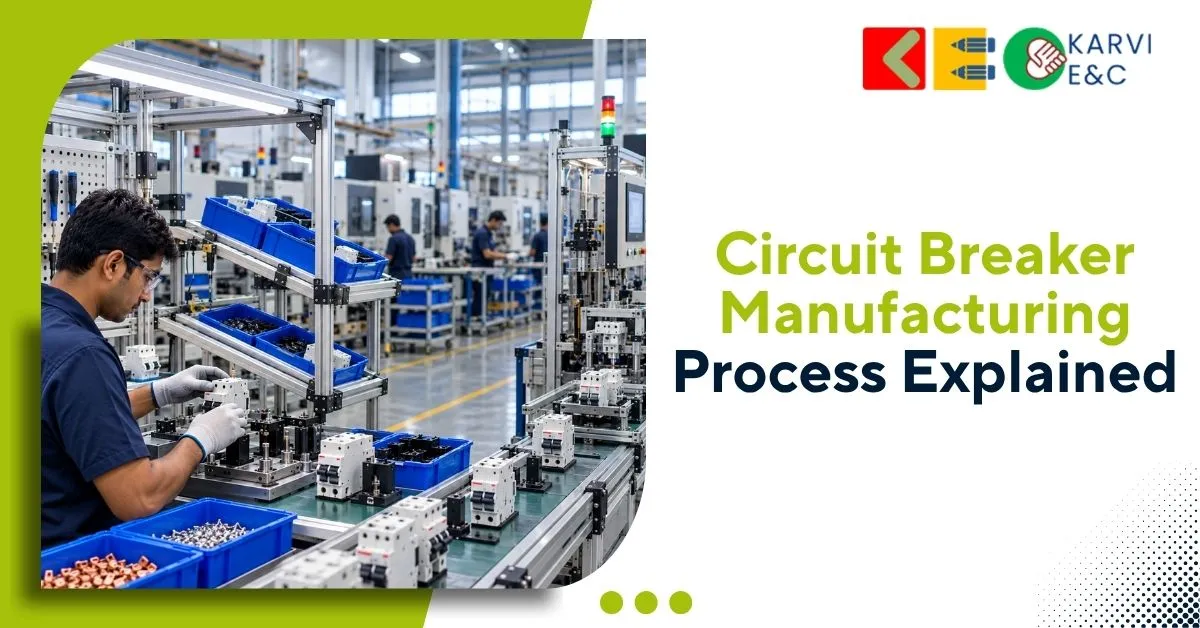
Circuit breakers are essential electrical protection devices used to control and interrupt current when abnormal conditions such as overloads or short circuits occur. Their reliability depends on precise component manufacturing, accurate assembly, dependable operating mechanisms, and thorough testing. Understanding the Circuit Breaker Manufacturing process provides a clear view of how electrical protection devices move from individual components to tested, production-ready products.
For manufacturers, efficiency also depends on how well assembly, material handling, inspection, and testing are integrated across the production line.
Key Components Used in Circuit Breaker Manufacturing
The manufacturing process begins with the production and preparation of components that form the complete circuit breaker. Depending on the breaker design, these can include:
- Insulating housing and covers
- Fixed and moving contacts
- Operating and tripping mechanisms
- Springs and mechanical components
- Terminals and conductive parts
- Arc-control components
- Fasteners and supporting elements
Dimensional accuracy is important because components must fit together correctly and maintain the required mechanical movement and electrical connections. In Circuit Breaker Manufacturing, material selection also depends on electrical conductivity, insulation, mechanical strength, heat resistance, and wear requirements.
How Are Circuit Breaker Components Manufactured?
Individual components are produced using processes suited to their material and geometry. Metal components may undergo stamping, forming, machining, bending, or finishing operations, while insulating housings can be produced through molding processes.
After production, components undergo dimensional and visual checks before entering assembly. This stage is important because inconsistencies in component dimensions can create alignment problems or affect the performance of the finished breaker.
For high-volume Circuit Breaker Manufacturing, dedicated tooling, fixtures, and automated equipment can help maintain repeatability while reducing unnecessary manual intervention.
Assembly of the Circuit Breaker
Once the components are prepared, they are assembled in a defined sequence. The contacts, operating mechanism, trip components, terminals, springs, and other internal parts must be positioned accurately within the housing.
Assembly fixtures can help operators maintain consistent component positioning, while Assembly SPMs can automate repetitive operations where production volume and process requirements justify automation.
For MCCB production, complete assembly lines may combine manual, semi-automatic, and automatic stations. Conveyors can connect these stations and provide controlled movement of components and partially assembled products between operations.
This approach creates a more organized Electronics Manufacturing Process while improving production flow and reducing handling-related delays.
Calibration and Functional Adjustment
After assembly, the operating mechanism and protection functions need to be verified. Mechanical movement, contact engagement, switching action, and trip response must conform to the product’s specified requirements.
Depending on the breaker design, calibration may involve adjusting mechanisms so that the breaker operates correctly under normal conditions while responding appropriately to fault conditions.
A controlled workstation or dedicated Special Purpose Machine can support these repetitive and precision-sensitive operations while maintaining consistent process parameters.
Looking to improve your circuit breaker production line? Contact Us for customized assembly, automation, testing, and manufacturing solutions.
Testing and Quality Inspection
Testing is a critical part of Circuit Breaker Manufacturing because assembly completion alone does not establish product reliability. Manufacturers can use dedicated circuit breaker test benches and product test benches to verify functional and electrical characteristics.
Production testing may include:
- Continuity and electrical checks
- Insulation-related testing
- Contact performance checks
- Operating and trip-function verification
- Mechanical operation checks
- Visual and dimensional inspection
Quality inspection stations provide a structured point for identifying assembly defects, incorrect positioning, damaged components, or other deviations before final dispatch.
Where Automation Improves Circuit Breaker Production?
Automation can be introduced selectively across operations where it delivers measurable improvements. Circuit Breaker Manufacturing can benefit from automated assembly, component handling, fastening, testing, inspection, and material movement.
For example, conveyors can streamline movement between stations, while SPMs can perform repetitive operations with consistent cycle times. Electronic assembly fixtures can assist operators with accurate positioning during sensitive assembly tasks.
Manufacturers with existing facilities can also consider production line upgradation instead of replacing the entire line. Modernization may involve improving workstations, introducing targeted automation, reorganizing material flow, or integrating dedicated testing and inspection equipment.
Building an Efficient Circuit Breaker Manufacturing Line
An effective production line brings together component preparation, assembly, testing, inspection, and material handling in a coordinated workflow. The right balance between manual and automated operations depends on product variation, production volume, available floor space, quality requirements, and investment objectives.
With properly engineered workstations, assembly equipment, conveyors, inspection systems, and test benches, manufacturers can implement Circuit Breaker Production Automation to create a more consistent and scalable production environment for MCB, MCCB, and other low-voltage electrical protection devices.
Frequently Asked Questions
The main stages include component manufacturing, preparation and inspection, assembly, mechanism adjustment, functional testing, quality inspection, and final verification before dispatch.
Depending on the production requirements, manufacturers may use assembly fixtures, manual workstations, conveyors, assembly SPMs, Special Purpose Machines, testing equipment, and quality inspection stations.
Automation can improve repeatability and production efficiency by handling repetitive assembly, material movement, testing, fastening, and inspection operations while reducing dependence on manual intervention.
Test benches provide controlled conditions for checking circuit breaker performance and functionality. They help manufacturers identify electrical, mechanical, or assembly-related issues before products reach customers.
Yes. Existing lines can be modernized through targeted automation, improved workstations, better material flow, dedicated testing systems, and upgraded inspection processes without necessarily replacing the complete production setup.
Conclusion
The Circuit Breaker Manufacturing process involves far more than assembling electrical components. Precision component production, controlled assembly, functional adjustment, testing, inspection, and efficient material flow all contribute to the reliability of the final product. Engineering-led automation and production-line optimization can further improve consistency, productivity, and quality across modern circuit breaker manufacturing facilities.
Related Posts

The bearing industry demands extremely high precision, smooth surface finishes, and strict dimensional accuracy to…
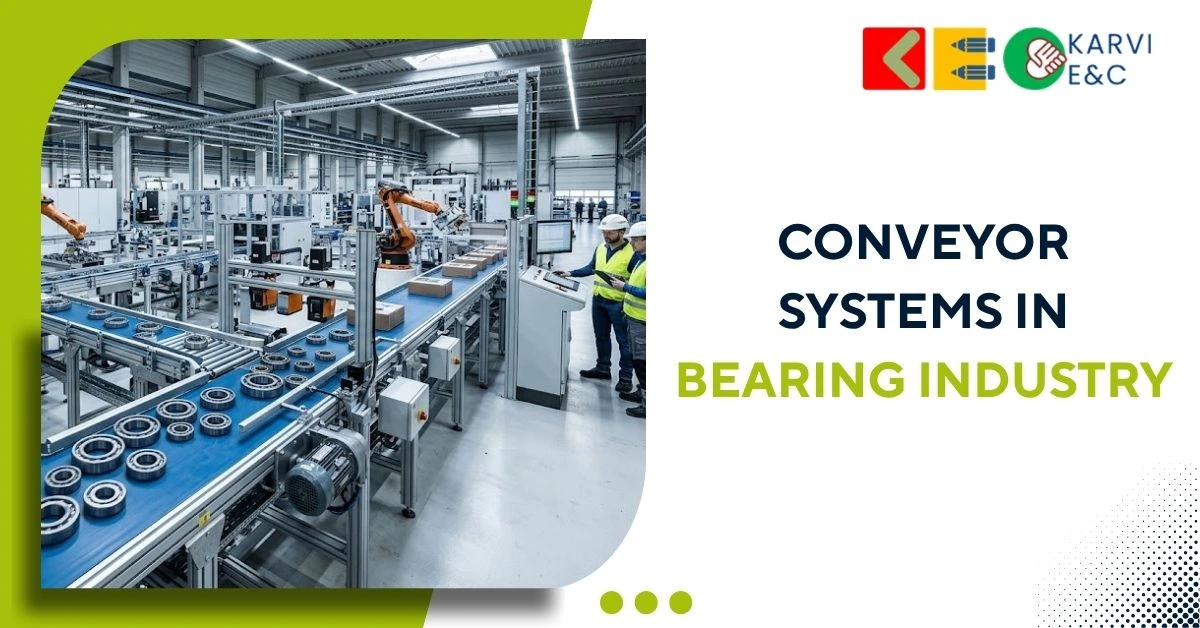
The bearing industry relies heavily on precision, efficiency, and consistent production flow to meet high-quality…