100, Mohangirikrupa estate, Deluxe Wafer Lane, Nr Jupiter Cross Road, GIDC Makarpura, Vadodara


Modern manufacturing is no longer driven by standardized production alone. Industries today operate with unique…
- Manufacturing Ideas
- 7 minute read
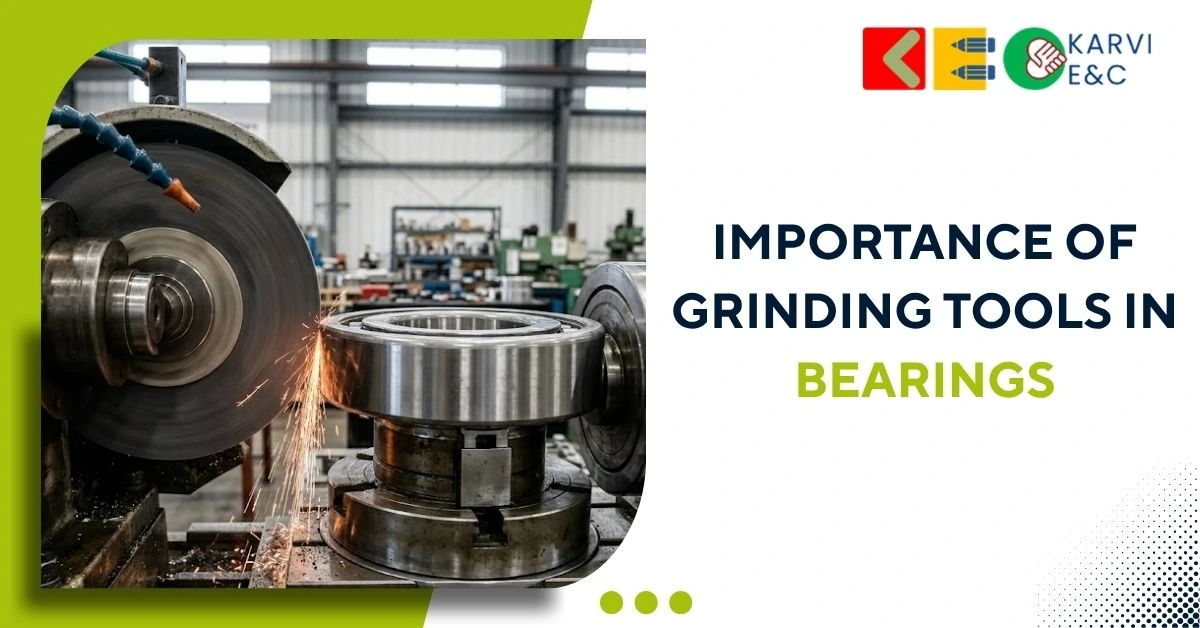
The bearing industry demands extremely high precision, smooth surface finishes, and strict dimensional accuracy to ensure optimal performance. Even minor deviations in manufacturing can lead to increased friction, excessive heat generation, and reduced lifespan of components. Grinding tools are essential in refining surfaces and ensuring that bearing components meet exact specifications required for efficient operation.
In the center of precision engineering, Bearing Grinding Tools play a vital role in achieving consistent quality and performance across manufacturing processes. These tools help remove imperfections, maintain dimensional accuracy, and improve surface finish, ensuring that bearings perform reliably in high-load and high-speed industrial applications.
What are Bearing Grinding Tools?
Grinding tools are specialized tools used for material removal and surface finishing in manufacturing processes. In the bearing industry, they are designed to achieve extremely fine tolerances and smooth finishes that are critical for reducing friction and improving operational efficiency. These tools are used at various stages of production to refine bearing components.
In the center of manufacturing accuracy, Bearing Grinding Tools include a variety of tools such as grinding wheels, abrasives, and superfinishing tools. Each type is designed for specific applications, enabling manufacturers to achieve precision, consistency, and high-quality output across production lines.
Importance of Grinding in Bearing Manufacturing
Grinding is one of the most critical processes in bearing manufacturing, as it directly determines the accuracy, surface finish, and overall performance of the final product. Bearings operate under high-speed and high-load conditions, where even minor imperfections can lead to increased friction, vibration, and early failure. Therefore, achieving precise dimensions and smooth surfaces is essential for ensuring reliability.
In the center of production efficiency, Bearing Grinding Tools enable manufacturers to remove material with high precision and achieve the required surface quality. This process reduces surface irregularities, improves load distribution, and enhances durability. By ensuring consistent finishing across components, grinding plays a vital role in maintaining quality standards and improving overall product performance.
Key importance includes:
- Achieving tight dimensional tolerances
- Improving surface finish quality
- Reducing friction and heat generation
- Enhancing durability and lifespan
- Ensuring consistent product quality
Types of Grinding Tools Used in Bearing Industry
Different types of grinding tools are used in the bearing industry depending on the production stage and material requirements. Each tool is designed to perform specific functions, ensuring efficiency and precision in the manufacturing process.
In the center of tool selection, Bearing Grinding Tools include cylindrical grinding tools for external surfaces, surface grinding tools for flat finishes, centerless grinding tools for high-speed operations, and internal grinding tools for inner surfaces. Superfinishing tools are also used to achieve ultra-smooth finishes required in high-performance bearings.
Key types include:
- Cylindrical grinding tools
- Surface grinding tools
- Centerless grinding tools
- Internal grinding tools
- Superfinishing tools
Role of Grinding Tools in Bearing Production Process
Grinding tools are used across multiple stages of the bearing production process, from initial shaping to final finishing. These tools help refine surfaces, correct dimensional deviations, and ensure that each component meets strict quality requirements. Their role is essential in achieving uniformity and consistency across production batches.
In the center of manufacturing performance, Bearing Grinding Tools support precise material removal and controlled finishing, allowing manufacturers to achieve high levels of accuracy. They also help in minimizing defects and improving the efficiency of production lines. By enabling consistent results, grinding tools contribute significantly to the reliability and functionality of bearing components.
Key roles include:
- Refining component surfaces
- Maintaining dimensional accuracy
- Reducing manufacturing defects
- Supporting high-speed production
- Improving overall product performance
Looking to improve precision and efficiency in your bearing production? Contact us today for advanced Bearing Grinding Tools solutions that deliver consistent results.
Benefits of Bearing Grinding Tools
The use of advanced grinding tools provides numerous benefits that improve both production efficiency and product quality. These tools help streamline manufacturing processes and ensure that components meet required specifications without excessive rework or material waste.
In the center of operational improvement, Bearing Grinding Tools offer enhanced precision, better surface finishing, and improved process consistency. They also reduce production time and increase efficiency, making them an essential part of modern manufacturing systems.
Key benefits include:
- High precision and accuracy
- Improved surface finish
- Reduced material wastage
- Increased productivity
- Better product reliability
Challenges in Grinding Process for Bearings
Despite its importance, the grinding process comes with several challenges that can impact efficiency and product quality. Issues such as tool wear, heat generation, and improper parameter settings can lead to defects and inconsistencies in production.
In the center of process optimization, Bearing Grinding Tools require proper maintenance, correct operational settings, and skilled handling to overcome these challenges. Manufacturers must continuously monitor and optimize grinding parameters to ensure consistent performance and minimize errors.
Key challenges include:
- Tool wear and frequent replacement
- Heat generation affecting surface quality
- Maintaining consistent precision
- Need for skilled operators
- Equipment maintenance and calibration
Surface Finish Optimization in Bearing Grinding
Surface finish optimization is a critical aspect of bearing manufacturing, as it directly affects friction, wear, and overall performance. A smoother surface ensures better contact between components, reducing energy loss and improving operational efficiency.
In the center of finishing processes, Bearing Grinding Tools are designed to achieve ultra-smooth surfaces by removing microscopic imperfections. This improves load distribution, reduces noise, and enhances durability. Optimized surface finishing ensures that bearings perform efficiently even under extreme operating conditions.
Advanced Grinding Techniques for High-Performance Bearings
Modern bearing manufacturing requires advanced grinding techniques to achieve superior precision and performance. Traditional grinding methods are often insufficient for high-performance applications where ultra-fine tolerances and surface finishes are required. Advanced techniques such as superfinishing, micro-grinding, and precision-controlled grinding are used to enhance component quality and meet demanding industrial standards.
In the center of advanced manufacturing, Bearing Grinding Tools are utilized with techniques like high-speed grinding, controlled feed rates, and optimized cooling systems to achieve consistent results. These methods help reduce surface defects, improve dimensional accuracy, and enhance overall efficiency. Advanced grinding techniques also enable manufacturers to handle complex geometries and high-performance materials, ensuring reliability in critical applications such as automotive, aerospace, and heavy machinery industries.
Precision and Quality Control in Grinding Operations
Maintaining precision and quality control is essential in grinding operations to ensure consistent results across production batches. Any variation in dimensions or surface quality can affect the performance and reliability of bearings.
In the center of quality assurance, Bearing Grinding Tools enable manufacturers to achieve strict tolerances and maintain uniformity. Advanced monitoring systems and controlled grinding parameters help ensure accuracy and reduce defects, resulting in high-quality production and improved operational performance.
Frequently Asked Questions
They ensure precision, improve surface finish, and enhance the performance and durability of bearing components.
Common materials include aluminum oxide, silicon carbide, and cubic boron nitride for durability and precision.
Proper grinding improves surface finish and reduces friction, which helps extend the lifespan of bearings.
Automation ensures consistency, reduces errors, and increases production efficiency through controlled operations.
A smooth surface reduces wear, improves efficiency, and ensures better performance under load conditions.
Conclusion
Grinding plays a vital role in bearing manufacturing by ensuring precision, surface quality, and consistent performance of components. It helps manufacturers achieve the required tolerances and finishes that are essential for smooth operation and long-term reliability. Without effective grinding processes, it would be difficult to meet the high standards required in modern industrial applications.
In the center of manufacturing excellence, Bearing Grinding Tools provide the foundation for high-quality production and improved efficiency. Their ability to enhance accuracy, reduce defects, and optimize processes makes them indispensable in the bearing industry. By adopting advanced grinding solutions, manufacturers can achieve better productivity, improved product quality, and long-term operational success.
Bearing Grinding ProcessBearing Production ProcessGrinding Machine ToolsGrinding Process in ManufacturingSurface Grinding Machine Tools
Related Posts
The bearing industry relies heavily on precision, efficiency, and consistent production flow to meet high-quality…