100, Mohangirikrupa estate, Deluxe Wafer Lane, Nr Jupiter Cross Road, GIDC Makarpura, Vadodara


Bearing manufacturing requires precision, consistency, and controlled production processes to ensure reliable performance in demanding…
- Automation Tips
- 8 minute read
Industries today operate in an increasingly competitive environment where efficiency, speed, and adaptability determine long-term success. Rising production costs, evolving customer expectations, labor shortages, and the demand for consistent quality have made it essential for businesses to rethink how they manage their operations. Companies can no longer rely solely on traditional processes if they want to remain productive and competitive.
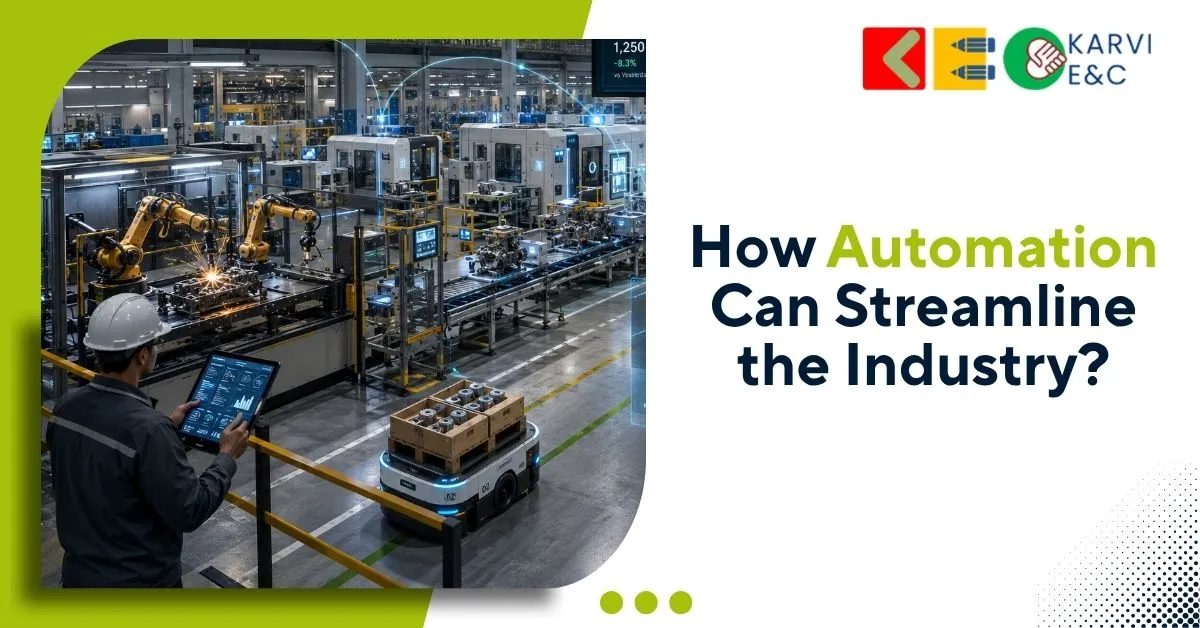
This is where Automation is reshaping industrial operations. Rather than simply replacing manual work, automation connects machines, people, and digital systems to create streamlined workflows across the entire organization. From production planning and inventory management to quality assurance and maintenance, automation helps industries eliminate repetitive tasks, improve decision-making, and build more agile manufacturing environments.
As businesses continue their digital transformation journey, automation has become one of the most valuable investments for improving operational efficiency, supporting sustainable growth, and preparing industries for future challenges.
Why Modern Industries Need More Than Traditional Manufacturing?
Industrial operations have become significantly more complex over the past decade. Manufacturers are expected to produce a wider variety of products while maintaining shorter lead times, higher quality standards, and lower operating costs. Managing these expectations through manual coordination often leads to inefficiencies that affect overall business performance.
Disconnected departments, delayed communication, inconsistent production data, and manual reporting can slow decision-making and reduce operational visibility. Automation helps industries overcome these limitations by creating connected systems where information flows seamlessly between departments, enabling faster responses and better coordination.
Instead of managing individual processes separately, businesses gain an integrated operational environment where production, logistics, quality, maintenance, and planning work together toward common business objectives.
Identifying the Hidden Bottlenecks That Slow Industrial Growth
Many production challenges are not always caused by machinery or workforce limitations. In many cases, hidden inefficiencies across daily operations gradually reduce productivity and increase operational costs.
Common industrial bottlenecks include:
- Manual data entry
- Production scheduling delays
- Poor communication between departments
- Inventory mismatches
- Equipment downtime
- Inconsistent quality inspections
- Delayed maintenance activities
- Limited production visibility
While these issues may appear independently, they often affect multiple departments simultaneously. Automation helps eliminate these bottlenecks by creating standardized workflows, reducing manual intervention, and enabling real-time access to operational information.
When businesses identify and address these hidden challenges, they create a stronger foundation for continuous operational improvement.
How Automation Connects Every Stage of Industrial Operations?
Industrial success depends on how efficiently different business functions work together. Automation connects production, inventory, maintenance, quality control, and logistics into a single, synchronized workflow, ensuring that information moves seamlessly across every stage of industrial operations. This eliminates communication gaps, reduces manual coordination, and improves overall operational efficiency.
Instead of isolated departments working independently, automation enables real-time data exchange between machines, control systems, and teams. Production schedules automatically align with inventory levels, maintenance activities are planned using equipment data, and quality inspections provide instant feedback to the production line. By connecting every stage of the manufacturing process, businesses can reduce delays, improve decision-making, and achieve smoother, more efficient industrial operations.
For example:
| Business Function | How Automation Improves It |
| Production Planning | Real-time scheduling and resource allocation |
| Inventory Management | Automated stock tracking and replenishment |
| Material Handling | Intelligent transportation and storage systems |
| Quality Control | AI-powered inspection and reporting |
| Maintenance | Predictive equipment monitoring |
| Production Reporting | Live operational dashboards |
This connected approach allows businesses to make faster decisions while maintaining better control over daily operations.
Streamlining Workflows Instead of Individual Processes
Many organizations begin automation by improving a single machine or production line. While this approach delivers localized improvements, it often fails to solve larger operational challenges.
The real value of Automation lies in streamlining complete workflows rather than isolated activities. When production planning, material movement, machine operations, quality inspections, and reporting are connected, information flows automatically across the organization without unnecessary manual intervention.
This integrated workflow reduces waiting times, improves collaboration between departments, and ensures that every process contributes to overall operational efficiency rather than functioning independently.
As a result, businesses experience smoother production cycles, faster response times, and better utilization of available resources.
Looking to streamline your industrial operations with Automation? Contact Us for customized automation solutions that improve productivity.
Improving Productivity Without Increasing Resources
Increasing production capacity does not always require expanding facilities or hiring additional employees. In many industries, significant productivity gains can be achieved by optimizing existing resources.
By implementing Automation, manufacturers can reduce repetitive manual tasks, improve machine utilization, minimize production interruptions, and optimize workforce allocation. Employees spend less time on routine activities and more time on process improvement, technical supervision, and innovation.
Automation also helps manufacturers maintain consistent production performance during periods of increasing demand, allowing businesses to scale operations without proportionally increasing operating costs.
This approach improves profitability while creating a more sustainable manufacturing environment.
Better Decision-Making Through Real-Time Operational Visibility
One of the biggest challenges in industrial management is making decisions based on outdated or incomplete information. Delayed reporting often prevents businesses from identifying production issues before they impact delivery schedules or product quality.
Real-time visibility gives manufacturers immediate access to production data from machines, sensors, and digital control systems. By implementing Automation, businesses can monitor production performance, equipment utilization, inventory levels, and quality metrics through centralized dashboards.
With access to accurate and up-to-date information, businesses can:
- Identify production bottlenecks faster
- Respond quickly to equipment issues
- Improve production planning
- Optimize resource allocation
- Monitor key performance indicators (KPIs)
- Support continuous improvement initiatives
Better visibility leads to better decisions, helping industries become more proactive rather than reactive.
Supporting Sustainable and Future-Ready Manufacturing
Sustainability has become an important objective for manufacturers seeking to reduce waste, improve energy efficiency, and optimize resource utilization. Modern industries are expected to balance productivity with responsible manufacturing practices.
By integrating Automation into manufacturing processes, businesses can improve production accuracy, minimize material waste, optimize machine performance, and monitor energy consumption more effectively. These capabilities help manufacturers use resources efficiently while supporting continuous operational improvements.
As technologies such as artificial intelligence, Industrial IoT, digital twins, and advanced analytics continue to evolve, automation will play an even greater role in helping businesses build resilient, future-ready manufacturing operations that can adapt to changing industrial demands.
Choosing the Right Automation Strategy
Every industry has unique production challenges, operational goals, and growth plans. Implementing automation successfully requires more than installing advanced equipment—it requires a well-defined strategy aligned with business objectives.
Before investing in Automation, businesses should evaluate existing workflows, identify operational bottlenecks, assess scalability requirements, and prioritize areas where automation can deliver the greatest value.
Working with experienced engineering partners ensures that automation solutions are designed around specific manufacturing requirements rather than applying a one-size-fits-all approach. Customized implementation reduces operational risks while maximizing long-term return on investment.
Frequently Asked Questions
Automation uses technologies such as robotics, PLCs, sensors, and intelligent software to streamline industrial processes. It helps manufacturers improve productivity, reduce manual intervention, maintain consistent quality, and optimize overall operational efficiency.
Automation connects production, inventory, quality control, maintenance, and material handling into a unified workflow. This improves coordination, reduces delays, minimizes errors, and enables faster, data-driven decision-making across industrial operations.
Automation helps manufacturers increase productivity, improve product quality, reduce operational costs, minimize downtime, enhance workplace safety, and optimize resource utilization. It also provides greater flexibility to adapt to changing production demands.
Yes. Automation solutions can be customized for businesses of all sizes. Manufacturers can automate specific processes or gradually expand automation across operations based on their production requirements, budget, and long-term business goals.
Automation enables smart manufacturing by connecting machines, sensors, and digital control systems to share real-time production data. This improves operational visibility, supports predictive maintenance, enhances process optimization, and enables faster business decisions.
Conclusion
Industries today need more than faster machines they need connected, intelligent operations capable of adapting to changing market demands. Streamlining industrial processes requires better coordination, improved visibility, and smarter decision-making across every department.
By integrating people, processes, and technology, Automation helps businesses eliminate inefficiencies, optimize workflows, and improve overall operational performance. From production planning and inventory management to quality control and predictive maintenance, automation creates a foundation for sustainable growth and continuous improvement.
As industries continue embracing digital transformation, investing in automation is no longer simply about increasing productivity. It is about building agile, efficient, and future-ready operations that remain competitive in an increasingly dynamic manufacturing landscape.
Advanced ManufacturingAutomation SolutionsEngineering AutomationProcess AutomationSmart Manufacturing
Related Posts
The automotive industry has long been recognized as one of the earliest adopters of advanced…
The manufacturing and industrial sectors are rapidly evolving with the adoption of advanced technologies that…