100, Mohangirikrupa estate, Deluxe Wafer Lane, Nr Jupiter Cross Road, GIDC Makarpura, Vadodara


Plastic components have become an integral part of modern manufacturing, serving industries that demand precision,…
- Engineering Guides
- 6 minute read
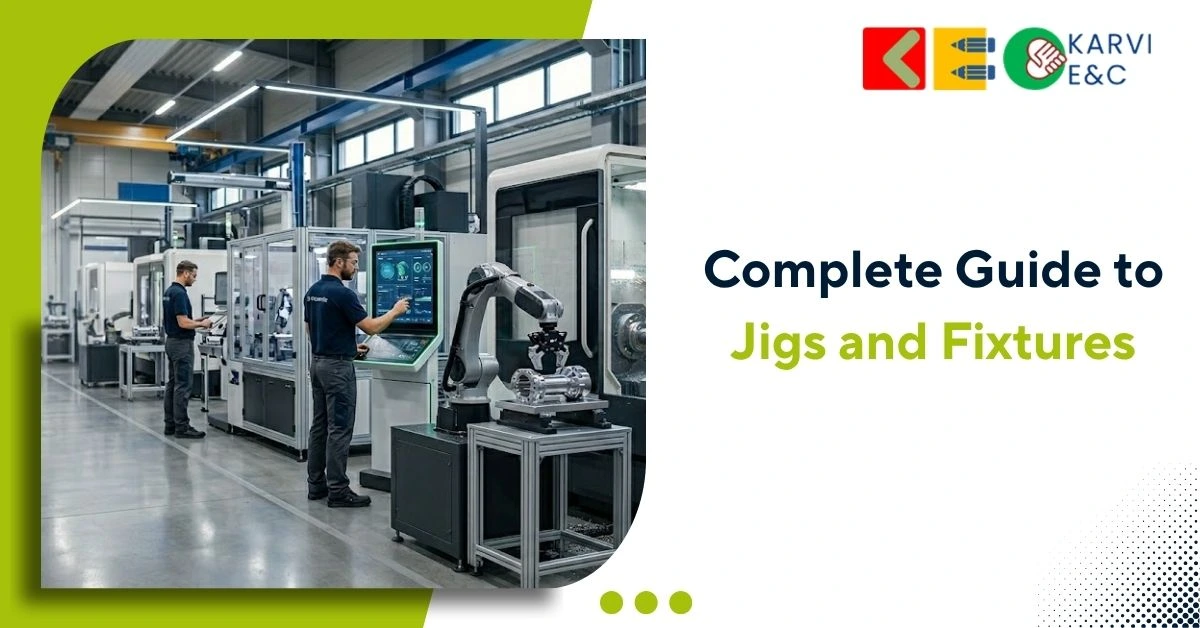
In today’s competitive manufacturing environment, precision, consistency, and productivity are essential for achieving operational excellence. Manufacturers continuously seek solutions that improve production efficiency while maintaining high-quality standards. One of the most effective ways to achieve these goals is through the use of jigs and fixtures.
Jigs and fixtures are specialized manufacturing tools designed to improve accuracy, reduce production time, and ensure repeatable results. They play a crucial role across industries such as automotive, aerospace, electronics, heavy engineering, and industrial manufacturing.
We help industries improve productivity, efficiency, and operational performance through advanced engineering, automation, and manufacturing solutions. Our expertise in designing customized jigs and fixtures enables manufacturers to streamline production processes and achieve superior results.
What Are Jigs and Fixtures?
Although often mentioned together, jigs and fixtures perform different functions in manufacturing operations.
A jig is a tool that holds a workpiece and guides the cutting tool during machining operations. It ensures that the tool follows the correct path, resulting in precise and consistent production.
A fixture, on the other hand, is used to securely hold and position a workpiece during manufacturing operations. Unlike a jig, it does not guide the cutting tool but ensures stability and accuracy throughout the process.
Difference Between Jigs and Fixtures
| Feature | Jig | Fixture |
| Purpose | Holds workpiece and guides tool | Holds and positions workpiece |
| Tool Guidance | Yes | No |
| Application | Drilling, reaming, tapping | Milling, welding, grinding |
| Mobility | Generally portable | Usually fixed |
Both are essential for improving manufacturing efficiency and maintaining consistent product quality.
Importance of Jigs and Fixtures in Manufacturing
Modern manufacturing demands high accuracy and faster production cycles. Jigs and fixtures help achieve these objectives by reducing manual effort and improving process reliability.
- Improved Accuracy: Proper positioning of tools and workpieces minimizes dimensional variations and ensures consistent product quality.
- Increased Productivity: By reducing setup time and simplifying operations, jigs and fixtures enable manufacturers to produce more components in less time.
- Reduced Manufacturing Costs: Accurate positioning reduces material waste, rework, and production errors, resulting in significant cost savings.
- Enhanced Safety: Secure workpiece holding minimizes movement during machining operations and helps create a safer working environment.
- Better Product Quality: Consistent positioning and repeatable processes result in uniform products that meet required quality standards.
Common Types of Jigs and Fixtures
Manufacturers use different types of jigs and fixtures depending on production requirements.
Common Types of Jigs
- Template Jigs
- Plate Jigs
- Channel Jigs
- Leaf Jigs
- Box Jigs
These jigs are commonly used for drilling, tapping, and machining operations requiring precise tool guidance.
Common Types of Fixtures
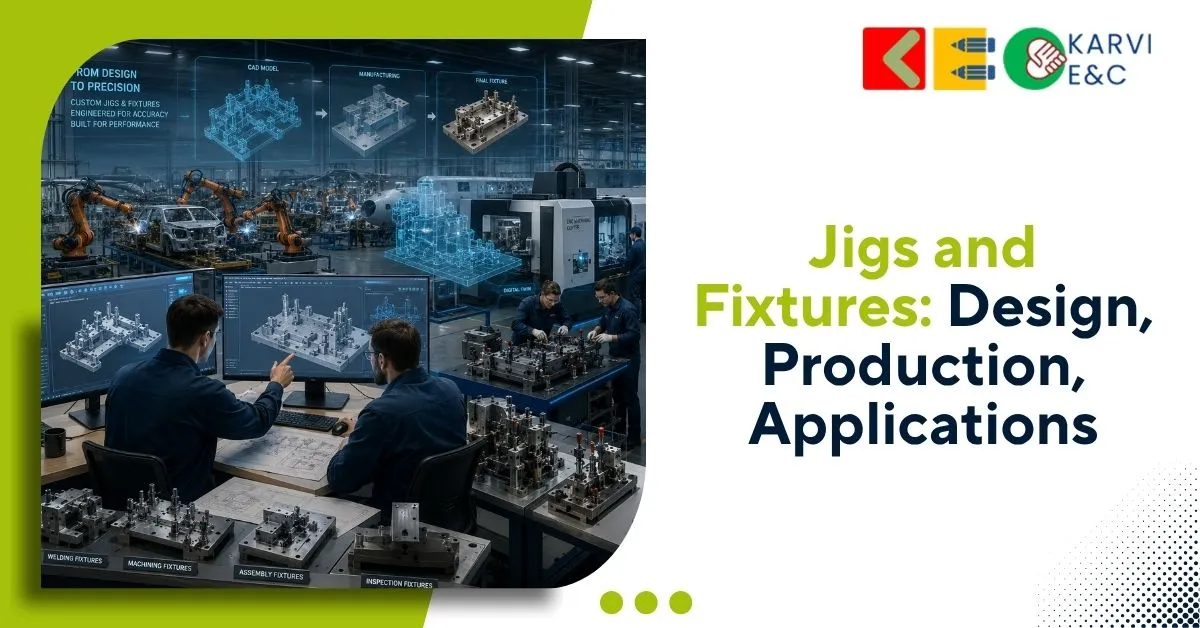
- Milling Fixtures
- Welding Fixtures
- Grinding Fixtures
- Turning Fixtures
- Assembly Fixtures
Fixtures are designed to securely hold components while ensuring accuracy during production processes.
Key Components of Jigs and Fixtures
A well-designed jig or fixture includes several important elements:
Locators: Position the workpiece accurately before machining begins.
Clamps: Secure the workpiece and prevent unwanted movement.
Supports: Provide stability and minimize vibration during operations.
Guide Elements: Used primarily in jigs to direct cutting tools accurately.
Base Structure: Provides overall strength and rigidity to the assembly. These components work together to improve manufacturing accuracy and efficiency.
Need precision-engineered jigs and fixtures for your manufacturing process? Get in touch with Karvi Engineering & Consultancy to discuss your requirements.
Applications of Jigs and Fixtures Across Industries
Jigs and fixtures are widely used in various industrial sectors.
- Automotive Industry: Used in engine component manufacturing, assembly lines, and chassis production.
- Aerospace Industry: Support precision machining and assembly of critical aircraft components.
- Electronics Manufacturing: Ensure accurate positioning during assembly and testing processes.
- Heavy Engineering: Facilitate fabrication, machining, and welding operations for large industrial components.
- Industrial Equipment Manufacturing: Improve productivity and consistency in machinery production.
Benefits of Custom Jigs and Fixtures
While standard solutions can be effective, many manufacturers benefit significantly from customized jigs and fixtures designed specifically for their operations.
- Faster Production Cycles: Custom solutions reduce setup times and improve workflow efficiency.
- Improved Repeatability: Ensure consistent results across multiple production runs.
- Reduced Human Error: Automated positioning minimizes operator dependency.
- Enhanced Productivity: Optimized designs support faster and more efficient manufacturing processes.
- Better Return on Investment: Long-term productivity improvements often outweigh the initial design and development costs.
Design Considerations for Jigs and Fixtures
Developing an effective jig or fixture requires careful engineering and planning.
Important factors include:
- Workpiece size and geometry
- Production volume requirements
- Required accuracy and tolerances
- Material selection
- Ease of operation
- Maintenance requirements
- Future scalability
A properly designed solution improves both performance and operational efficiency.
Future of Jigs and Fixtures in Smart Manufacturing
As Industry 4.0 technologies continue to transform manufacturing, jigs and fixtures are becoming more advanced.
Emerging trends include:
- Smart fixtures with integrated sensors
- Automation-ready fixture systems
- AI-assisted manufacturing solutions
- Digital simulation and design validation
- Rapid fixture development using additive manufacturing
These innovations help manufacturers achieve higher productivity, better quality control, and improved operational visibility.
Frequently Asked Questions
Jigs and fixtures are manufacturing tools used to hold, locate, support, and position workpieces during machining, welding, assembly, and production processes.
A jig guides the cutting tool while holding the workpiece, whereas a fixture only secures and positions the workpiece.
They improve accuracy, increase productivity, reduce setup time, minimize errors, and ensure consistent product quality.
Automotive, aerospace, electronics, heavy engineering, industrial equipment manufacturing, and many other industries use jigs and fixtures extensively.
Yes. Custom jigs and fixtures are designed according to specific production requirements, workpiece geometry, and manufacturing processes.
They reduce setup times, improve repeatability, eliminate process variations, and enable faster production cycles.
Conclusion
Jigs and fixtures are fundamental tools in modern manufacturing. They improve accuracy, enhance productivity, reduce costs, and support consistent product quality across various industrial applications.
As manufacturing continues to evolve toward automation and smart factory environments, the importance of well-designed jigs and fixtures will only increase. Investing in customized solutions can significantly improve operational performance and create long-term competitive advantages.
Partnering with experienced engineering experts like Karvi Engineering & Consultancy ensures that manufacturers receive reliable, efficient, and future-ready jig and fixture solutions tailored to their specific production requirements.
Design of Jigs and FixturesDifference Between Jigs and FixturesJigs and Fixtures ManufacturerTypes of Jigs and Fixture
Related Posts
Modern manufacturing depends on precision, repeatability, and process consistency to produce high-quality products at scale…
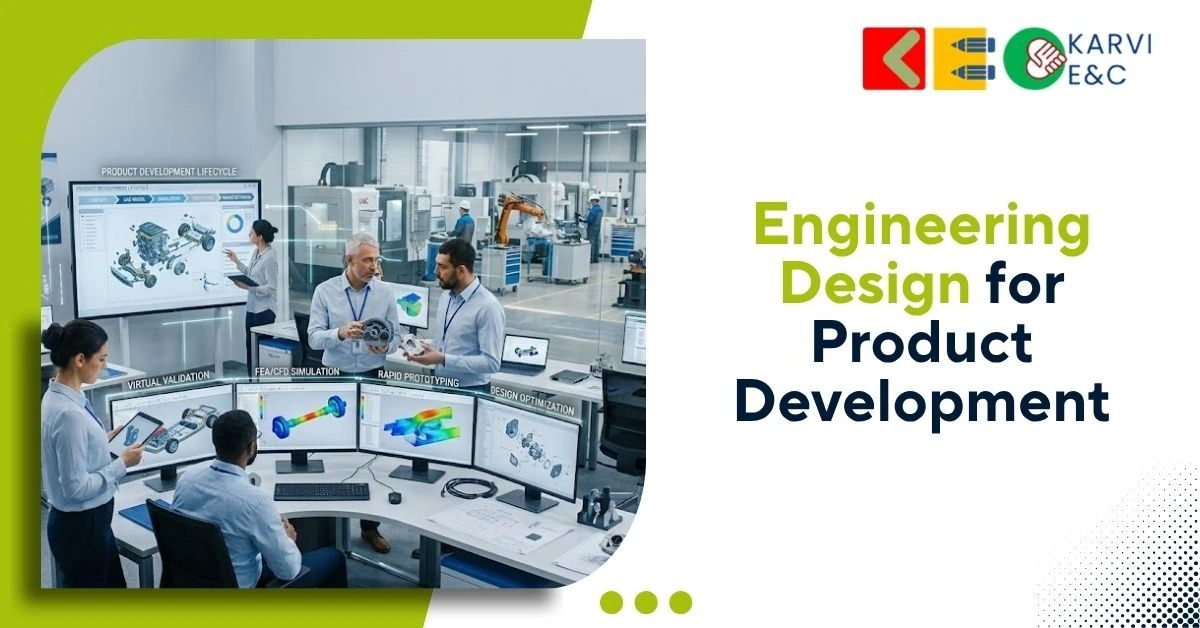
Developing a successful product requires more than an innovative idea. Manufacturers must ensure that every…