100, Mohangirikrupa estate, Deluxe Wafer Lane, Nr Jupiter Cross Road, GIDC Makarpura, Vadodara


Plastic components have become an integral part of modern manufacturing, serving industries that demand precision,…
- Engineering Guides
- 7 minute read
Modern manufacturing depends on precision, repeatability, and process consistency to produce high-quality products at scale. Whether it’s machining complex components, welding assemblies, or inspecting finished parts, maintaining accurate positioning throughout production is essential. Jigs and Fixtures play a critical role in achieving these objectives by reducing manual errors, improving production efficiency, and ensuring consistent quality across every manufacturing cycle.
From small-scale fabrication workshops to fully automated production facilities, manufacturers rely on these specialized tools to simplify operations, shorten setup times, and support high-volume production. As industries continue to adopt advanced manufacturing technologies, well-designed jigs and fixtures have become indispensable for achieving greater productivity and operational reliability.
Understanding Their Role in Modern Manufacturing
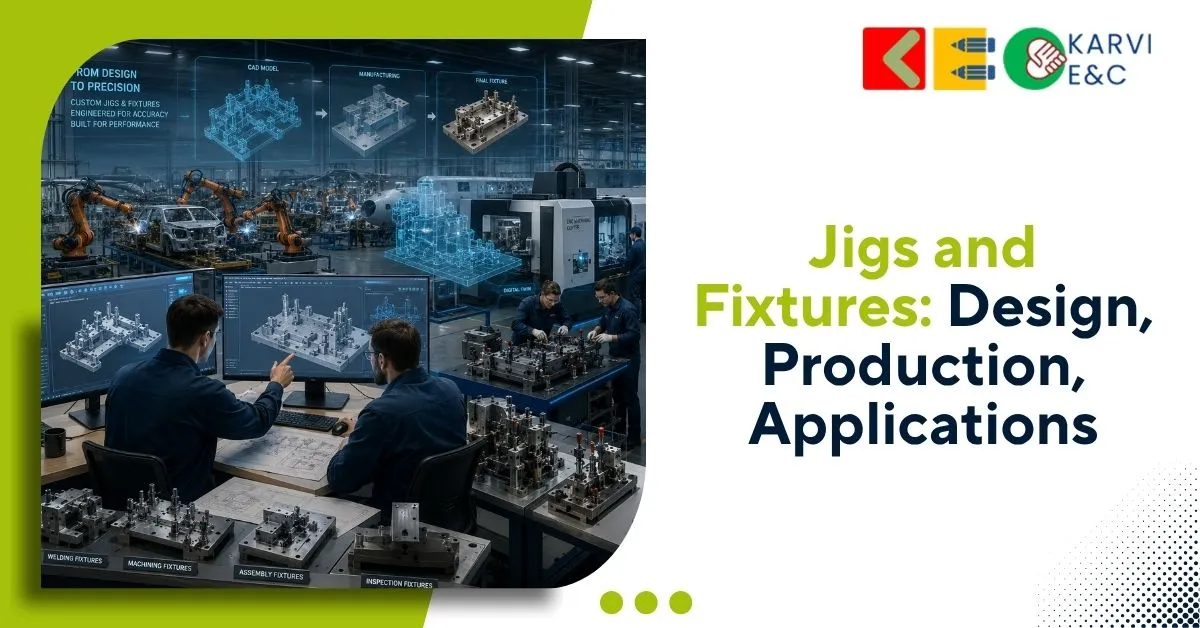
Manufacturing processes require every component to be positioned accurately before machining, welding, assembly, or inspection begins. Even a slight variation in workpiece positioning can affect dimensional accuracy, product quality, and production efficiency. Jigs and Fixtures provide the stability and repeatability needed to maintain consistent results throughout the manufacturing process.
While both tools improve manufacturing precision, they perform different functions. Jigs guide the cutting or drilling tool to ensure accurate operations, whereas fixtures securely hold and locate the workpiece without directing the cutting tool. Together, they help manufacturers standardize production, reduce setup time, minimize operator dependency, and maintain uniform quality across multiple production cycles.
Jigs vs. Fixtures: Understanding the Difference
Although the terms are often used together, jigs and fixtures serve different purposes in manufacturing operations. Understanding their individual roles helps manufacturers select the right solution for specific production requirements.
| Feature | Jigs | Fixtures |
| Primary Function | Guides the cutting or drilling tool | Holds and locates the workpiece |
| Tool Guidance | Yes | No |
| Workpiece Support | Limited | Strong and rigid |
| Common Operations | Drilling, reaming, tapping | Milling, turning, welding, assembly, inspection |
| Primary Objective | Improve machining accuracy | Maintain workpiece stability and repeatability |
Selecting the appropriate Jigs and Fixtures depends on factors such as the manufacturing process, production volume, component complexity, and required precision.
Design Principles That Ensure Accuracy and Repeatability
The effectiveness of any manufacturing setup depends largely on its design. Well-engineered Jigs and Fixtures should position workpieces accurately, withstand operational forces, and allow quick loading and unloading without compromising safety or precision.
Several design considerations influence overall performance, including proper workpiece location, reliable clamping mechanisms, material selection, ergonomic handling, and dimensional stability. Designers must also consider future production requirements, allowing flexibility for component variations and process improvements. By balancing durability, ease of use, and manufacturing requirements, businesses can achieve consistent production quality while reducing maintenance and setup time.
Looking for precision-engineered Jigs and Fixtures? Contact Us to develop customized tooling solutions that improve accuracy, productivity, and production efficiency.
From Design to Production: How They’re Manufactured
The production of Jigs and Fixtures begins with understanding the manufacturing process, workpiece geometry, tolerance requirements, and production volume. These factors determine the most suitable manufacturing method and material selection.
CNC machining is commonly preferred for applications requiring high dimensional accuracy and long-term durability. Fabricated steel structures provide robust solutions for heavy-duty industrial environments, while additive manufacturing enables rapid prototyping and lightweight tooling for specialized applications. In many cases, manufacturers combine multiple production techniques to balance strength, precision, cost, and production efficiency.
Selecting the right production method ensures that jigs and fixtures deliver reliable performance throughout their operational life while supporting changing manufacturing demands.
Applications Across Different Industries
Because manufacturing processes vary across industries, Jigs and Fixtures are designed to meet specific operational requirements while maintaining consistent quality and productivity.
In automotive manufacturing, they support precision welding, machining, and assembly operations. Aerospace manufacturers use them to achieve tight dimensional tolerances for critical components. Heavy engineering industries rely on them for machining large parts, while fabrication shops use specialized fixtures to improve welding accuracy and reduce distortion. They are equally valuable in electronics manufacturing, medical device production, and quality inspection processes where repeatability and precision are essential.
Their adaptability makes them an integral part of modern manufacturing across diverse industrial sectors.
Improving Productivity Through Precision Tooling
Production efficiency is not only determined by machine capability but also by how consistently components are positioned during every operation. Properly designed Jigs and Fixtures eliminate unnecessary adjustments, reduce setup time, and improve process repeatability throughout production.
By maintaining accurate workpiece positioning, manufacturers can reduce rework, minimize material waste, improve cycle times, and enhance product quality. Standardized tooling also simplifies operator training and supports higher production volumes without compromising consistency. These improvements contribute directly to lower production costs and better overall manufacturing performance.
Selecting the Right Solution for Your Manufacturing Process
Choosing the right Jigs and Fixtures requires a thorough understanding of production objectives, component complexity, machining operations, and future manufacturing requirements. A solution designed for one application may not perform efficiently in another.
Factors such as production volume, required tolerances, workpiece material, machine compatibility, maintenance requirements, and scalability should all be evaluated before finalizing the design. Working with experienced engineering professionals ensures that tooling solutions align with operational goals while supporting long-term manufacturing efficiency and product quality.
Frequently Asked Questions
The primary difference is that Jigs and Fixtures perform different functions during manufacturing. A jig guides the cutting or drilling tool, while a fixture securely holds and positions the workpiece. Both improve accuracy, repeatability, and production efficiency.
Jigs and Fixtures are widely used in automotive, aerospace, heavy engineering, fabrication, electronics, medical device manufacturing, and precision machining industries where consistent quality and accurate positioning are essential.
Depending on the application, Jigs and Fixtures are manufactured using tool steel, mild steel, aluminium, stainless steel, and engineering plastics. Material selection depends on strength, durability, production volume, and operational requirements.
By ensuring consistent workpiece positioning, Jigs and Fixtures reduce setup time, minimize production errors, improve repeatability, decrease material waste, and enhance overall productivity throughout the manufacturing process.
Yes. Most Jigs and Fixtures are custom-designed to match specific workpieces, manufacturing processes, machine configurations, and production volumes, ensuring maximum accuracy, efficiency, and long-term operational performance.
Conclusion
In today’s competitive manufacturing environment, precision and consistency are critical for achieving high-quality production and operational efficiency. Well-designed Jigs and Fixtures help manufacturers standardize processes, improve repeatability, reduce production errors, and optimize workflow across machining, welding, assembly, and inspection operations.
Whether for high-volume production or specialized manufacturing applications, investing in the right Jigs and Fixtures enables businesses to enhance productivity, maintain consistent quality, and adapt to evolving industrial requirements. With the right engineering expertise, manufacturers can develop tooling solutions that support reliable performance and long-term manufacturing excellence.
CNC FixturesInspection FixturesJigs and Fixtures DesignMachining FixturesManufacturing FixturesWelding Fixtures
Related Posts
Developing a successful product requires more than an innovative idea. Manufacturers must ensure that every…
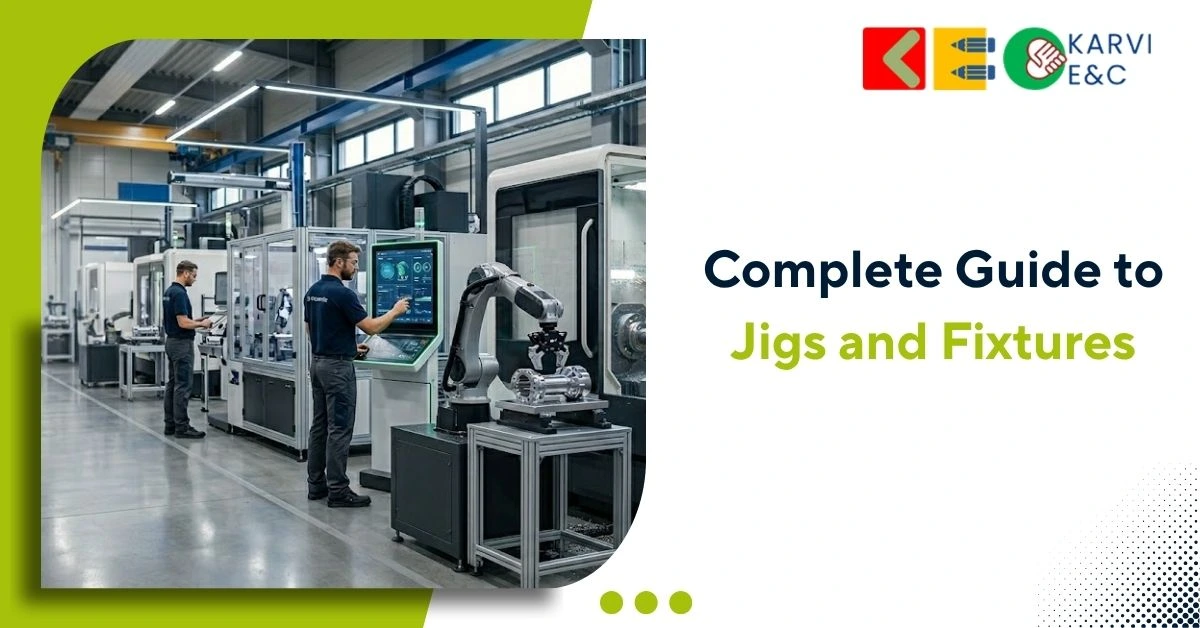
In today's competitive manufacturing environment, precision, consistency, and productivity are essential for achieving operational excellence…