100, Mohangirikrupa estate, Deluxe Wafer Lane, Nr Jupiter Cross Road, GIDC Makarpura, Vadodara


Modern manufacturing depends on precision, repeatability, and process consistency to produce high-quality products at scale…
- Engineering Guides
- 7 minute read
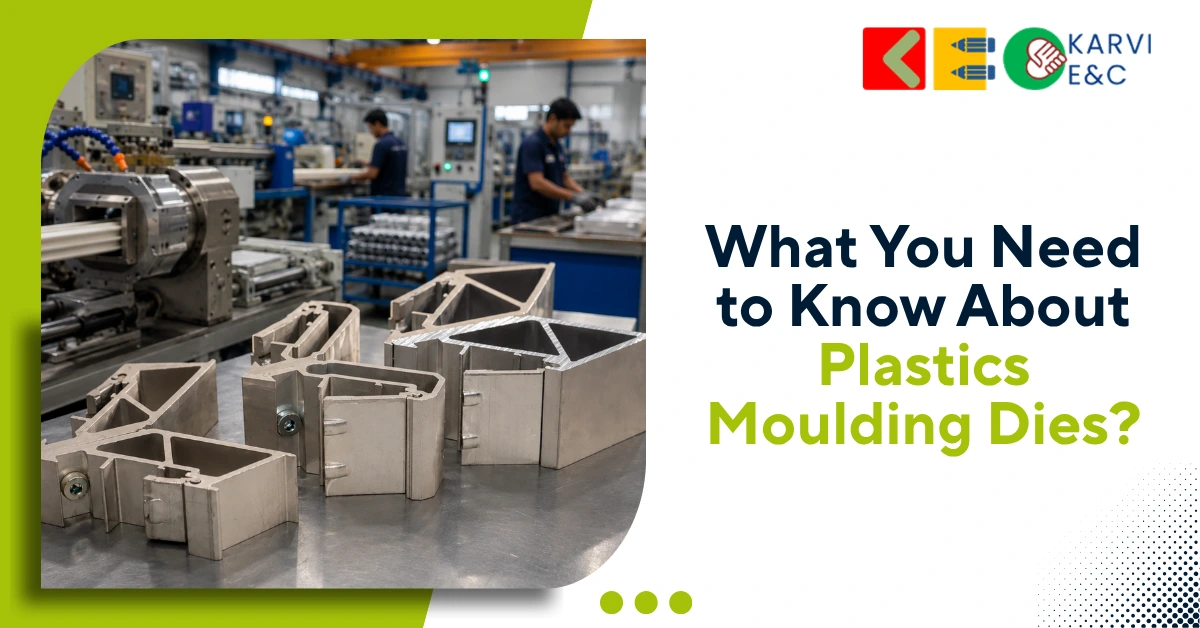
Plastic components have become an integral part of modern manufacturing, serving industries that demand precision, durability, and high-volume production. From automotive parts and consumer goods to medical devices and industrial equipment, the quality of every plastic product depends on the accuracy of the tooling used to manufacture it. Plastics & Moulding Dies are at the core of this process, enabling manufacturers to produce components with consistent dimensions, superior surface finish, and reliable performance.
As production requirements become more complex, manufacturers require moulding solutions that not only ensure precision but also optimize cycle time, reduce material waste, and support long-term productivity. Understanding how plastics and moulding dies are designed, manufactured, and applied helps businesses make informed decisions that improve manufacturing efficiency and product quality.
Why They Are Essential in Modern Manufacturing?
Modern manufacturing relies on consistency, repeatability, and dimensional accuracy to meet increasing production demands. Plastics & Moulding Dies provide the precision tooling required to shape molten plastic into complex components while maintaining tight tolerances across thousands of production cycles.
Unlike conventional manufacturing methods, precision moulding allows manufacturers to produce identical components with minimal variation. This consistency reduces defects, improves assembly accuracy, and ensures products meet industry quality standards. Well-engineered moulds also shorten production cycles, minimize material waste, and support cost-effective mass manufacturing, making them indispensable across various industrial applications.
Understanding the Plastic Moulding Process
Plastic moulding involves injecting or forming heated plastic material into a precision-engineered mould cavity, where it cools and solidifies into the desired shape. The performance of this process depends largely on the quality of Plastics & Moulding Dies, as every cavity, runner, gate, and cooling channel directly influences the final product.
Different moulding techniques, including injection moulding, compression moulding, and blow moulding, are selected based on product geometry, material properties, and production requirements. Regardless of the process, precision tooling ensures accurate material flow, consistent filling, efficient cooling, and repeatable production while reducing defects such as warpage, shrinkage, and sink marks.
Key Factors That Influence Mould Performance
The efficiency of a mould depends on more than its overall design. Several engineering factors determine how effectively Plastics & Moulding Dies perform throughout their operational life.
Material selection plays a significant role in tool durability and wear resistance, while cavity design influences dimensional accuracy and surface finish. Cooling channel design affects cycle time and product consistency, whereas proper venting allows trapped air to escape during mould filling. Maintaining precise tolerances and balanced material flow further improves production reliability and reduces manufacturing defects. When these factors are carefully engineered, moulds deliver consistent performance, longer service life, and greater production efficiency.
Looking for precision-engineered Plastics & Moulding Dies? Contact Us to develop customized moulding solutions that improve product quality.
From Design to Manufacturing: Building Reliable Moulding Solutions
Developing reliable tooling requires a structured engineering approach that begins with product analysis and continues through design, manufacturing, validation, and testing. Plastics & Moulding Dies are typically developed using advanced CAD/CAM software to create accurate 3D models before manufacturing begins.
Simulation tools help evaluate material flow, cooling efficiency, and potential manufacturing defects before production, reducing costly design revisions. Once validated, mould components are manufactured using precision CNC machining, EDM, grinding, and finishing processes before assembly and trial testing. This integrated approach ensures every mould meets quality requirements and performs reliably in production environments.
Applications Across Different Industries
The versatility of Plastics & Moulding Dies makes them suitable for manufacturing a wide range of components across multiple industries. Different sectors require customized mould designs to achieve specific quality, performance, and production objectives.
In the automotive industry, precision moulds produce dashboards, interior trims, connectors, and functional components with consistent quality. Consumer goods manufacturers rely on moulding dies for durable plastic products with excellent surface finishes, while packaging industries use them for bottles, containers, and caps produced in high volumes. Medical equipment, electrical components, and industrial engineering applications also depend on precision tooling to manufacture complex parts that meet strict dimensional and quality standards.
How Precision Mould Engineering Improves Production Efficiency?
Manufacturing efficiency is influenced not only by production equipment but also by the quality of the tooling supporting each production cycle. Well-designed Plastics & Moulding Dies improve productivity by maintaining dimensional consistency, reducing cycle times, and minimizing process variations.
Precision mould engineering also reduces material waste, lowers scrap rates, improves cooling performance, and extends tool life, resulting in lower operating costs and higher production output. These advantages enable manufacturers to maintain consistent quality while achieving greater efficiency in both prototype development and large-scale production.
Choosing the Right Moulding Partner for Long-Term Manufacturing Success
Selecting the right engineering partner is just as important as choosing the right manufacturing process. The performance of Plastics & Moulding Dies depends on the expertise behind their design, manufacturing, and validation. A well-engineered mould not only produces high-quality components but also minimizes downtime, reduces maintenance, and supports long-term production efficiency.
When evaluating a mould manufacturing partner, businesses should consider design capabilities, engineering experience, manufacturing infrastructure, simulation expertise, quality assurance processes, and after-sales support. An experienced partner can optimize mould performance through design validation, mould flow analysis, precision machining, and continuous improvement, ensuring reliable tooling that adapts to changing production requirements.
Frequently Asked Questions
Plastics & Moulding Dies are precision-engineered tools used to shape molten plastic into specific components through moulding processes. They ensure dimensional accuracy, repeatability, and consistent product quality across high-volume manufacturing.
Plastics & Moulding Dies are widely used in automotive, packaging, consumer goods, medical devices, electrical, and industrial manufacturing to produce complex plastic components with consistent quality.
Well-designed Plastics & Moulding Dies reduce cycle time, minimize material waste, improve dimensional consistency, lower scrap rates, and extend tool life, resulting in higher productivity and reduced manufacturing costs.
The performance of Plastics & Moulding Dies depends on material selection, cavity design, cooling efficiency, venting, machining accuracy, and regular maintenance. Proper engineering ensures reliable production and longer tool life.
Mould flow analysis helps evaluate how molten plastic fills the mould cavity before manufacturing begins. It enables Plastics & Moulding Dies to be optimized for balanced material flow, reduced defects, shorter cycle times, and improved product quality.
Conclusion
High-quality plastic products begin with precision tooling. Plastics & Moulding Dies are essential for achieving accurate dimensions, consistent repeatability, and efficient production across a wide range of manufacturing applications. From initial design and simulation to precision manufacturing and validation, every stage of mould development influences product quality and operational performance.
By investing in well-engineered Plastics & Moulding Dies, manufacturers can reduce production defects, improve cycle times, extend tool life, and build scalable manufacturing processes that support long-term business growth.
Industrial MouldingInjection MouldingMould ManufacturingPlastic Injection MouldPlastic Mould DesignPrecision Moulds
Related Posts
Developing a successful product requires more than an innovative idea. Manufacturers must ensure that every…
In today's competitive manufacturing environment, precision, consistency, and productivity are essential for achieving operational excellence…