100, Mohangirikrupa estate, Deluxe Wafer Lane, Nr Jupiter Cross Road, GIDC Makarpura, Vadodara


Manufacturing industries are constantly under pressure to produce more in less time while maintaining product…
- Productivity Tips
- 5 minute read
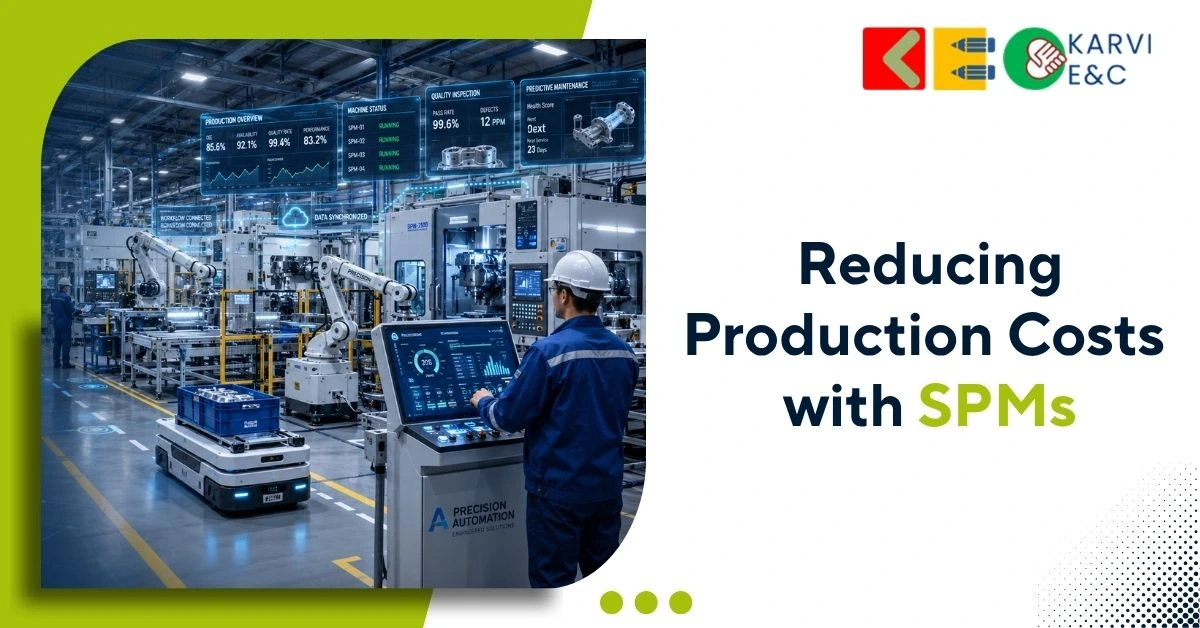
Controlling production costs has become a priority for manufacturers operating in competitive industrial environments. Rising labor expenses, material wastage, production delays, and inefficient workflows can significantly impact profitability. While reducing costs is essential, maintaining product quality and production efficiency remains equally important.
To overcome these challenges, many manufacturers are investing in Special Purpose Machines that are designed to automate specific production processes and improve operational efficiency. Unlike conventional machines, SPMs are engineered to meet unique manufacturing requirements, helping industries reduce waste, optimize resources, and lower overall production costs.
By integrating customized automation into manufacturing operations, businesses can achieve sustainable cost savings while improving productivity and process reliability.
Understanding Production Costs in Manufacturing
Production costs include every expense involved in manufacturing a product, from raw materials and labor to machine operation and maintenance. Inefficient production systems often increase these costs through delays, rework, excess material usage, and manual processes.
Implementing Special Purpose Machines enables manufacturers to streamline production activities, improve workflow efficiency, and eliminate unnecessary operational expenses.
Key factors contributing to high production costs include:
- Manual and repetitive operations
- Production bottlenecks
- Material wastage
- Excessive downtime
- Quality defects
- Long production cycles
Addressing these challenges helps organizations build more efficient and cost-effective manufacturing systems.
How Special Purpose Machines Reduce Production Costs?
Manufacturing processes become more economical when machines are designed specifically for the required application.
By introducing Special Purpose Machines into production environments, manufacturers can automate repetitive tasks, improve cycle times, and optimize resource utilization.
Cost reduction is achieved through:
- Lower manual labor requirements
- Faster production cycles
- Reduced machine idle time
- Improved material utilization
- Better workflow efficiency
- Reduced operational waste
- Higher production consistency
Custom-designed automation systems help manufacturers improve operational performance while minimizing unnecessary production expenses.
Improved Process Efficiency and Resource Utilization
Efficient production systems make better use of available resources.
Modern manufacturing facilities implement Special Purpose Machines to ensure that production processes operate with greater speed, accuracy, and consistency.
These systems help improve:
- Machine utilization
- Workforce productivity
- Material handling
- Process synchronization
- Production planning
- Manufacturing efficiency
Improved resource utilization contributes directly to lower operating costs and higher production output.
Challenges and SPM Benefits
| Production Cost Challenge | How Special Purpose Machines Help |
| High labor costs | Automate repetitive operations |
| Production delays | Reduce cycle time |
| Material wastage | Improve process accuracy |
| Quality defects | Increase production consistency |
| Equipment downtime | Improve operational reliability |
| Low productivity | Increase manufacturing efficiency |
Optimizing these areas enables manufacturers to achieve sustainable cost reductions while maintaining production quality.
Supporting Long-Term Manufacturing Efficiency
Reducing production costs is not only about lowering immediate expenses but also about improving long-term manufacturing performance.
By implementing Special Purpose Machines, manufacturers can create production systems that support:
- Consistent manufacturing quality
- Reduced operational risks
- Better production planning
- Improved equipment utilization
- Scalable manufacturing operations
- Long-term cost efficiency
Well-engineered automation solutions provide lasting value by improving both productivity and operational stability.
Looking to implement Special Purpose Machines in your manufacturing processes? Contact us today for expert guidance and customized automation solutions.
Building Smarter Manufacturing Operations
As manufacturing demands continue to evolve, businesses require production systems capable of delivering efficiency and flexibility.
Customized Special Purpose Machines support smarter manufacturing by enabling better workflow control, faster production, and improved operational performance.
Manufacturers investing in process-specific automation can strengthen competitiveness while maintaining lower production costs and higher production reliability.
Frequently Asked Questions
Special Purpose Machines are custom-designed machines developed to perform specific manufacturing operations efficiently and accurately.
They reduce manual labor, improve production efficiency, minimize material waste, shorten cycle times, and enhance process consistency.
Industries such as automotive, heavy engineering, electronics, industrial equipment, plastics, and oil & gas commonly use Special Purpose Machines.
Yes. They automate repetitive tasks, reduce downtime, improve workflow efficiency, and increase production output.
Yes. They can be integrated into existing manufacturing systems to improve operational efficiency with minimal disruption.
Conclusion
Reducing production costs requires more than minimizing expenses—it requires improving the efficiency of the entire manufacturing process. By implementing Special Purpose Machines, manufacturers can automate critical operations, reduce waste, optimize resources, and improve production consistency.
Through customized engineering and process-specific automation, Special Purpose Machines help organizations build cost-effective, reliable, and future-ready manufacturing systems that support sustainable industrial growth.
Factory AutomationProduction Cost ReductionProduction Line AutomationSmart Factory AutomationSPM Manufacturing
Related Posts
Manufacturing industries are under constant pressure to improve productivity, maintain product quality, reduce operational costs,…
Modern manufacturing demands high levels of accuracy, consistency, and operational reliability. Even minor dimensional deviations…