100, Mohangirikrupa estate, Deluxe Wafer Lane, Nr Jupiter Cross Road, GIDC Makarpura, Vadodara


Controlling production costs has become a priority for manufacturers operating in competitive industrial environments. Rising…
- Productivity Tips
- 7 minute read
Manufacturing industries are constantly under pressure to produce more in less time while maintaining product quality and controlling operational costs. However, challenges such as manual processes, production bottlenecks, equipment downtime, and inconsistent workflows often limit factory productivity. As customer expectations and production demands continue to increase, manufacturers require smarter approaches to improve operational performance without compromising efficiency.
To overcome these challenges, many organizations are adopting Industrial Automation as a strategic solution for optimizing manufacturing operations. By integrating automated technologies with production systems, manufacturers can streamline workflows, improve process consistency, and reduce dependency on manual operations. Automation enables factories to operate more efficiently by improving resource utilization, minimizing production delays, and supporting continuous manufacturing processes.
As modern manufacturing continues to evolve, Manufacturing Automation has become an essential component of building productive, scalable, and future-ready factories capable of meeting changing industrial demands.
Understanding Industrial Automation in Manufacturing
Manufacturing operations involve numerous interconnected processes that must work together efficiently to achieve consistent production outcomes. Delays or inefficiencies in one process can affect the overall productivity of the factory.
Industrial Automation refers to the use of automated control systems, machinery, sensors, and digital technologies to perform manufacturing operations with minimal manual intervention. Rather than replacing people entirely, automation improves how production systems operate by increasing accuracy, reducing repetitive tasks, and enhancing operational consistency.
Manufacturers implement automation across several production activities, including:
- Assembly operations
- Material handling
- Machine control
- Quality inspection
- Packaging processes
- Production monitoring
Through Manufacturing Automation, industries can improve workflow efficiency while creating more reliable and consistent manufacturing environments.
Why Factory Productivity Matters?
Factory productivity directly influences manufacturing efficiency, production costs, customer satisfaction, and business profitability. A productive factory is capable of producing more output while utilizing available resources efficiently.
Low factory productivity often results from:
- Manual and repetitive operations
- Frequent production stoppages
- Equipment downtime
- Material handling delays
- Production bottlenecks
- Inconsistent manufacturing processes
By implementing Industrial Automation, manufacturers can eliminate many of these operational challenges and create production systems that deliver higher efficiency and better operational performance.
Improving factory productivity is not simply about increasing production volume—it is about improving how efficiently every manufacturing process operates.
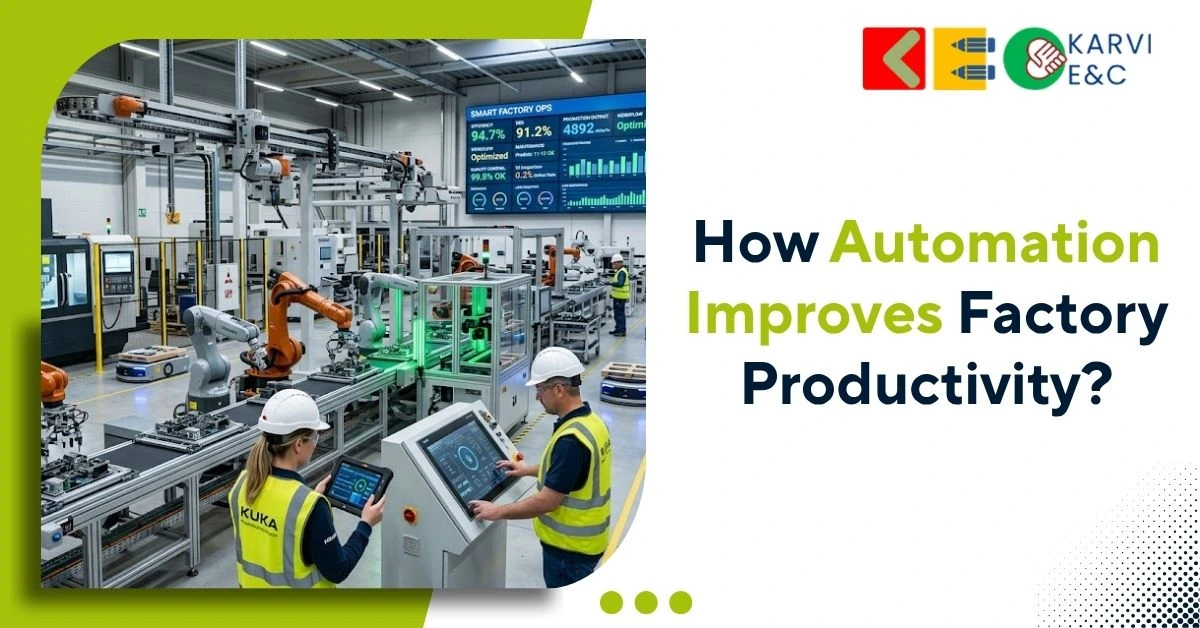
How Industrial Automation Improves Factory Productivity?
Manufacturing productivity improves when production systems operate with greater speed, consistency, and accuracy.
Many manufacturers invest in Industrial Automation because it enables production processes to operate with minimal interruptions while maintaining high levels of precision.
Automation contributes to higher factory productivity by:
- Reducing manual intervention
- Improving production speed
- Optimizing workflow efficiency
- Increasing machine utilization
- Reducing production downtime
- Improving operational consistency
- Enhancing process control
- Supporting continuous production
Instead of relying heavily on manual operations, automated production systems improve overall manufacturing performance by creating stable and repeatable workflows.
As production requirements increase, automation provides manufacturers with the flexibility needed to maintain productivity without sacrificing quality.
Reducing Downtime and Production Delays
Downtime is one of the most significant factors affecting factory productivity. Equipment failures, manual process interruptions, and inefficient production planning often result in unnecessary production losses.
With Industrial Automation, manufacturers can improve production continuity through better equipment control and process monitoring.
Automation helps reduce downtime by:
- Monitoring machine performance
- Improving equipment utilization
- Supporting preventive maintenance
- Reducing manual process interruptions
- Improving production scheduling
By minimizing unexpected production stoppages, factories can maintain consistent manufacturing output and improve overall operational efficiency.
How Automation Improves Factory Productivity?
| Manufacturing Challenge | How Industrial Automation Improves Productivity |
| Manual operations | Reduces repetitive tasks and improves efficiency |
| Production bottlenecks | Streamlines workflow and production flow |
| Equipment downtime | Improves monitoring and machine utilization |
| Quality variation | Increases production consistency |
| Material handling delays | Optimizes movement across production lines |
| Limited production capacity | Supports higher throughput and scalability |
Automation enables manufacturers to improve multiple aspects of production simultaneously, creating a more productive manufacturing environment.
Improving Product Quality and Process Consistency
Consistent quality is essential for maintaining customer satisfaction and reducing manufacturing costs.
Variations in manual production often lead to product defects, rework, and production delays. By implementing Industrial Automation, manufacturers can standardize production processes and improve operational consistency.
Automation supports quality improvement through:
- Accurate process control
- Repeatable manufacturing operations
- Reduced human error
- Better inspection capabilities
- Real-time production monitoring
Consistent manufacturing processes help reduce waste while improving overall factory productivity.
Through effective Manufacturing Automation, organizations can achieve both higher production output and better product quality without increasing operational complexity.
Looking to implement Industrial Automation in your manufacturing processes? Contact us today for expert guidance and customized automation solutions.
Supporting Smarter Manufacturing Operations
Modern factories require production systems capable of adapting to changing market demands while maintaining operational efficiency.
By adopting Industrial Automation, manufacturers can build smarter factories that integrate equipment, production data, and operational workflows into connected manufacturing environments.
Automation supports smarter manufacturing through:
- Better production visibility
- Faster operational decisions
- Improved workflow coordination
- Enhanced resource utilization
- Scalable production systems
- Continuous operational improvement
These capabilities help manufacturers remain competitive while supporting long-term operational growth.
As industries continue to embrace digital transformation, automation will play an increasingly important role in improving factory productivity.
Long-Term Benefits for Manufacturers
Factory productivity is not achieved through isolated improvements but through continuous optimization of manufacturing operations.
Manufacturers implementing Industrial Automation often experience long-term benefits such as:
- Higher production efficiency
- Lower operating costs
- Improved product quality
- Better workplace safety
- Reduced production waste
- Improved resource utilization
- Greater manufacturing flexibility
These improvements strengthen manufacturing performance while creating production systems capable of supporting future industrial growth.
Investing in automation enables organizations to build sustainable manufacturing operations that remain competitive in evolving industrial environments.
Frequently Asked Questions
Industrial Automation uses automated systems, machinery, and control technologies to improve manufacturing efficiency and reduce manual intervention.
It improves workflow efficiency, reduces downtime, enhances process consistency, and increases production output.
Manufacturing Automation involves applying automation technologies across manufacturing processes to improve productivity, quality, and operational performance.
Yes. By improving efficiency, reducing waste, and minimizing downtime, Industrial Automation helps lower overall manufacturing costs.
Automotive, heavy engineering, electronics, industrial equipment, oil & gas, chemicals, and many other manufacturing industries benefit from automation.
Conclusion
Improving factory productivity requires more than increasing production capacity—it requires creating efficient, reliable, and well-coordinated manufacturing systems. By implementing Industrial Automation, manufacturers can optimize workflows, reduce downtime, improve product quality, and strengthen overall operational performance.
As manufacturing technologies continue to evolve, Manufacturing Automation will remain a key driver of smarter and more productive factories. Organizations investing in automation today will be better prepared to achieve sustainable growth, improve competitiveness, and build future-ready manufacturing operations.
Factory AutomationFactory ProductivityIndustrial Automation IndiaIndustrial Automation SolutionsManufacturing Automation
Related Posts
Manufacturing industries are under constant pressure to improve productivity, maintain product quality, reduce operational costs,…
Modern manufacturing demands high levels of accuracy, consistency, and operational reliability. Even minor dimensional deviations…